
A 200A loadbreak elbow and a bushing insert form one of the most common connection combinations in medium-voltage underground distribution systems. They may be used between medium-voltage cable and transformers, switchgear, cable branch equipment, and other apparatus with a suitable bushing interface.
The two parts work together, but a matching 200A rating does not by itself make them a correct pair.
A complete Separable Connector connection has several interfaces to consider. The bushing insert must fit the equipment bushing well. The loadbreak elbow must mate with the insert. On the other side, the elbow body and contact must suit the cable.
For project orders, OEM equipment, replacement work, and distributor stock, checking these points together is more reliable than selecting each accessory separately.
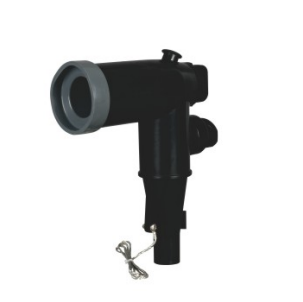
The Bushing Insert Must Fit the Equipment Bushing Well
The bushing insert sits between the equipment and the loadbreak elbow.
A typical connection follows this arrangement:
Equipment Bushing Well → Bushing Insert → Loadbreak Elbow → Cable
The equipment side therefore comes first.
On a transformer, RMU, switchgear unit, cable branch box, or similar medium-voltage equipment, the existing bushing well determines which bushing insert can be installed. The selected insert then provides the interface for the 200A loadbreak elbow.
This is why the bushing insert cannot be selected only from the elbow model.
For new equipment, the bushing specification or equipment drawing normally gives the clearest reference. For an existing installation, model markings, drawings, interface dimensions, and clear photos are useful for checking the original connection.
A similar shape is not enough. Components within a Separable Connector system can look alike while belonging to different interface arrangements.
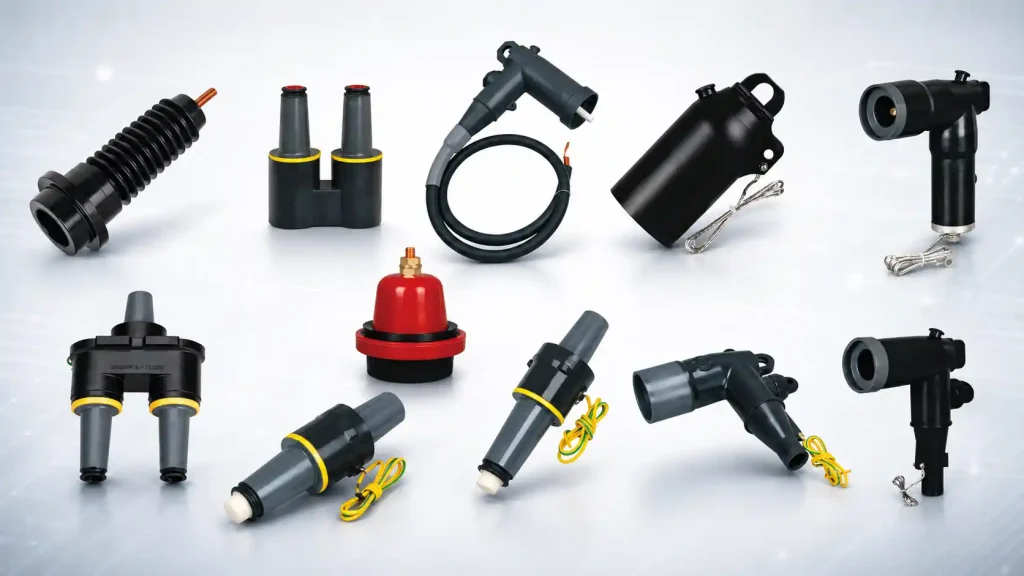
YIEOU’s 200A product range is built around complete connection applications rather than one isolated accessory. The same system can include loadbreak elbows, bushing-related components, junctions, insulating caps, grounding elbows, and other medium-voltage cable accessories.
The Elbow and Insert Need the Same 200A Loadbreak Interface
Once the equipment side is clear, the elbow-to-insert connection can be confirmed.
A 200A loadbreak elbow is designed to engage with a compatible 200A loadbreak interface. The bushing insert therefore needs to provide the corresponding interface.
This is different from simply seeing “200A” on both product descriptions.
The current class may be the same while the interface or voltage class is different. Loadbreak and deadbreak products also belong to different connection arrangements and should not be mixed simply because their current ratings appear similar.
For a 200A Separable Connector set, the main relationship is straightforward:
| Connection Point | What Needs to Match |
|---|---|
| Equipment → Bushing Insert | Equipment bushing well and insert |
| Bushing Insert → Elbow | 200A loadbreak interface and voltage class |
| Elbow → Cable | Conductor and cable insulation dimensions |
These three points cover most of the matching work before the detailed model is finalized.
The Voltage Class Must Match the Project
The 200A current rating does not define the voltage class.
A 200A loadbreak connection can be available for different medium-voltage systems, so the elbow and bushing insert need to follow the same voltage requirements as the equipment and cable system.
For example, YIEOU’s 200A connection products are used in American-style medium-voltage cable systems including 15kV and 24kV arrangements. The actual combination should follow the rated voltage and interface specified for the project.
That means a project specification should not stop at:
200A loadbreak elbow
It should identify the required voltage class as well.
The same applies to the bushing insert. A mechanically similar insert from another voltage class should not be treated as a replacement without checking its electrical rating and interface.
For new equipment, this information is normally available from the electrical design or equipment specification. For replacement work, the equipment nameplate and existing accessory markings are useful starting points.
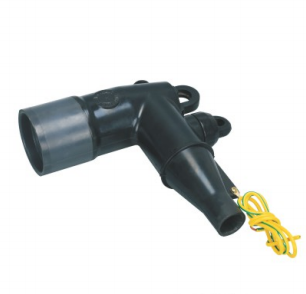
The Elbow Must Match the Cable Insulation Diameter
The equipment-side connection can be perfectly matched while the elbow is still wrong for the cable.
A loadbreak elbow has to accommodate the actual cable entering the connector body. Cable conductor size is important, but it is not the only dimension that matters.
The cable insulation diameter is particularly important for selecting the correct Separable Connector body.
Two medium-voltage cables with the same conductor cross-sectional area do not necessarily have the same insulation diameter. Voltage class, insulation thickness, cable construction, and individual cable specifications can all affect the final size.
So a cable description such as:
15kV, 95 mm² cable
provides useful information, but it may still be incomplete for final elbow selection.
Adding the actual insulation diameter makes the selection much clearer.
Commercial 200A loadbreak elbows are supplied for defined cable insulation-diameter ranges rather than one universal cable size, which is why this dimension forms part of the connector specification.
For project orders, the cable datasheet is often the easiest reference. If the datasheet is unavailable, the relevant cable dimensions can be checked before the final Separable Connector model is confirmed.
The Elbow Contact Must Suit the Cable Conductor
Inside the elbow, the cable conductor also needs the correct contact connection.
The conductor material and cross-sectional area should therefore be included together with the cable insulation diameter.
For most RFQs, these cable details are useful:
- conductor material;
- conductor cross-sectional area;
- cable insulation diameter;
- voltage class;
- cable construction or datasheet when available.
There is no need to turn a first inquiry into a long technical document. A cable datasheet often contains most of the information needed for this part of the selection.
For distributor and OEM orders covering several cable sizes, it is better to define the required cable ranges at the beginning. The corresponding elbow configurations can then be separated clearly by model, packaging, or project reference.
Existing Bushing Inserts Need to Be Identified Before Replacing the Elbow
Replacement projects require a little more care because the complete system is not always being replaced.
In many cases, the bushing insert remains on the equipment while only the old elbow and cable termination are replaced.
The new elbow must then match the existing insert.
The current rating alone is not enough to identify that interface. Existing product markings, voltage class, equipment information, and interface details become much more useful.
Clear photographs can help, especially when the original model number is visible. Where documentation is available, a drawing or existing product specification gives an even better reference.
The situation is different when both the elbow and bushing insert are being replaced.
If the equipment bushing well remains unchanged, a compatible elbow-and-insert combination can be selected around that equipment interface. This gives the project more flexibility than replacing only one side of an existing connection.
For older transformers, switchgear, or distribution equipment, making this distinction early can prevent a replacement order from becoming a series of separate trial matches.
New Equipment Is Easier to Match from the Complete Drawing
For a new transformer, RMU, switchgear panel, or compact substation, the Separable Connector can usually be defined directly from the equipment and cable drawings.
The equipment drawing establishes the bushing arrangement.
The cable schedule provides the voltage class, conductor size, and cable dimensions.
The connection layout shows whether the cable runs directly to the equipment or passes through additional accessories such as a junction.
With those details available, the elbow and bushing insert can be treated as one connection rather than two catalogue items.
This is particularly useful for equipment manufacturers and OEM customers. The connector arrangement can be fixed together with the electrical design, and the same specification can then be maintained for later production batches.
Junctions and Insulating Caps Must Follow the Same Interface
A 200A connection does not always stop at one elbow and one insert.
Underground distribution networks may also use 200A loadbreak junctions to create additional connection points. Spare interfaces may require insulating caps, while maintenance arrangements may include grounding elbows.
These accessories still belong to the same Separable Connector system.
For example, a 200A elbow connected to a loadbreak junction needs a compatible junction interface. If one position on the junction is unused, the cap fitted to that position must also suit the interface.
The same principle applies when a project includes several transformers or cable branches. The accessories should follow one defined connection arrangement instead of being selected independently for each position.
YIEOU supplies 200A cable accessories including the JY ZT-15/200 loadbreak elbow connector, JY MP-15kV loadbreak junction, and JY JDZT-15/200 grounding elbow for different connection layouts.
For projects that need several types of Medium Voltage Cable Accessories, sending the complete single-line diagram or cable connection drawing can make product matching much clearer.
Complete Sets Are More Convenient for Project and Distributor Orders
A single replacement elbow and a 300-set project order are different purchasing situations.
For a known replacement model, the requirement may already be fixed.
For project quantities, distributor stock, and OEM supply, the elbow, insert, and related accessories are better handled as a defined set.
A project may require:
- 200A loadbreak elbows;
- matching bushing inserts;
- loadbreak junctions;
- insulating caps;
- grounding accessories;
- related cable connection components.
Not every project needs all of these parts, but the products that are included should follow the same voltage and interface requirements.
This also makes the BOM easier to manage.
Instead of several accessories being ordered under broad names such as “200A elbow” and “200A bushing,” each combination can be tied to the equipment type, cable range, or project position.
That becomes more important when the same configuration has to be supplied again several months later.
Repeat Orders Need the Same Confirmed Configuration
For distributors and equipment manufacturers, a successful first order is only part of the requirement.
The same Separable Connector configuration may be ordered repeatedly for different equipment batches or customer projects.
Once the elbow, bushing insert, cable range, and related accessories have been confirmed, those details should remain clear in subsequent orders.
Model identification is especially useful when several similar 200A products are being stocked at the same time.
Packaging and labeling can also be arranged around different cable sizes, product sets, or customer programs, making warehouse handling and later replacement easier.
YIEOU supports OEM production, private labeling, product customization, and batch supply for medium- and high-voltage cable accessories. For ongoing B2B orders, these details can be agreed together with the technical configuration instead of being separated from the product itself.
A Useful RFQ Includes the Equipment and Cable Data
A 200A elbow and bushing insert RFQ does not need to be complicated.
The following information is normally enough to start matching the set:
| RFQ Item | Useful Information |
|---|---|
| System voltage | Rated voltage / voltage class |
| Current class | 200A |
| Equipment | Transformer, RMU, switchgear, branch box, etc. |
| Equipment interface | Bushing well model, drawing, or marking |
| Cable conductor | Material and cross-sectional area |
| Cable insulation | Actual insulation diameter |
| Quantity | Sample, project quantity, or regular batch order |
| Replacement order | Existing model, drawing, or clear photos |
For new equipment, a drawing and cable datasheet often cover most of the table.
For replacement orders, the existing connector markings and equipment information are usually more valuable than a general description such as “200A elbow.”
If several accessories are being purchased together, the complete connection drawing or BOM can be included as well.
A Separable Connector Manufacturer Can Match the Complete 200A Set
The main advantage of sourcing the elbow and bushing insert from the same Separable Connector manufacturer is not simply reducing the number of suppliers.
It gives the complete connection one consistent specification.
The equipment-side interface, elbow-to-insert interface, cable range, voltage class, and related accessories can all be checked around the same project requirement.
For an OEM customer, that may mean fixing one connection configuration for a transformer or switchgear range.
For a distributor, it may mean preparing several clearly separated 200A combinations for different cable sizes.
For a project contractor, it may mean matching the accessories directly against the equipment schedule and cable list before delivery.
YIEOU can supply the 200A loadbreak elbow, bushing insert, and related Separable Connector accessories as part of the same project or batch order. OEM labeling, packaging, product identification, and repeat supply requirements can also be coordinated according to the order.
FAQ
Can a 200A elbow fit any 200A bushing insert?
No. The elbow and insert still need compatible voltage classes and loadbreak interfaces. The 200A current rating alone does not confirm the complete match.
Does the bushing insert need to match the transformer or switchgear?
Yes. The equipment bushing well determines the equipment side of the insert, while the other side provides the interface for the loadbreak elbow.
Is cable size enough to select a 200A Separable Connector?
Not always. Conductor size is important, but the actual cable insulation diameter should also be checked because cables with the same conductor size can have different insulation dimensions.
Can an existing bushing insert remain when only the elbow is replaced?
Yes, provided the new elbow is compatible with the existing insert and meets the electrical requirements of the system. Existing markings, drawings, and equipment information can be used to confirm the replacement.
Can YIEOU supply the elbow and matching accessories together?
Yes. The 200A Separable Connector, bushing insert, junctions, insulating caps, grounding accessories, and other required cable accessories can be coordinated according to the connection layout.
Match the Complete Connection Before Ordering
A 200A loadbreak elbow and a bushing insert should be selected as parts of the same connection.
The bushing insert needs to fit the equipment bushing well. The elbow and insert need the same compatible 200A loadbreak interface and voltage class. The elbow then needs to match the cable conductor and insulation diameter.
For new projects, the equipment drawing and cable datasheet usually provide a clear starting point. For replacement work, existing markings, equipment information, drawings, and photos can be used to identify the connection already in service.
For project, OEM, and distributor orders, YIEOU can match the Separable Connector, bushing insert, and related medium-voltage cable accessories around the same equipment and cable specification. Send the project voltage, equipment interface, cable data, and quantity together, and the complete 200A connection can be confirmed before production.