
A grounding elbow is easy to overlook when a 200A Separable Connector system is being specified. Most attention naturally goes to the loadbreak elbow, bushing insert, cable size, and equipment interface because these components form the connection used during normal operation.
The grounding elbow has a different job.
It is used when an isolated cable circuit needs to be temporarily grounded for maintenance or testing. The circuit must first be switched, isolated, tested, and confirmed de-energized according to the approved operating procedure before the grounding elbow is applied.
That is why a grounding elbow does not need to be included with every 200A Separable Connector order. Whether it belongs in the project depends on how the cable circuit will be isolated, where maintenance grounding will take place, and which 200A interfaces are available for that purpose.
At YIEOU, we manufacture 200A Separable Connector products together with compatible medium-voltage cable accessories, including grounding elbows. When a project requires temporary grounding through the 200A interface, we confirm the grounding accessory together with the voltage class, equipment connection, interface arrangement, and intended grounding position.
What Does a Grounding Elbow Do in a 200A Separable Connector System?
A grounding elbow provides a temporary connection between a compatible 200A interface and the grounding arrangement used during maintenance.
Once the cable circuit has been properly isolated and verified de-energized, the grounding elbow may be connected to a suitable bushing insert, junction, feed-through interface, or another compatible 200A loadbreak interface.
The actual grounding position depends on the equipment and cable layout.
For example, one project may use a junction as the planned sectionalizing and grounding point. Another may require access through an equipment-side bushing after the normal cable connection has been removed.
The grounding elbow therefore belongs to the maintenance condition of the Separable Connector system rather than its normal energized condition.
During normal operation, the cable is typically connected through a loadbreak elbow. If a compatible interface is energized but unused, that interface normally requires a correctly rated insulating cap instead.
A grounding elbow and an insulating cap may both connect to a 200A interface, but they are not interchangeable.
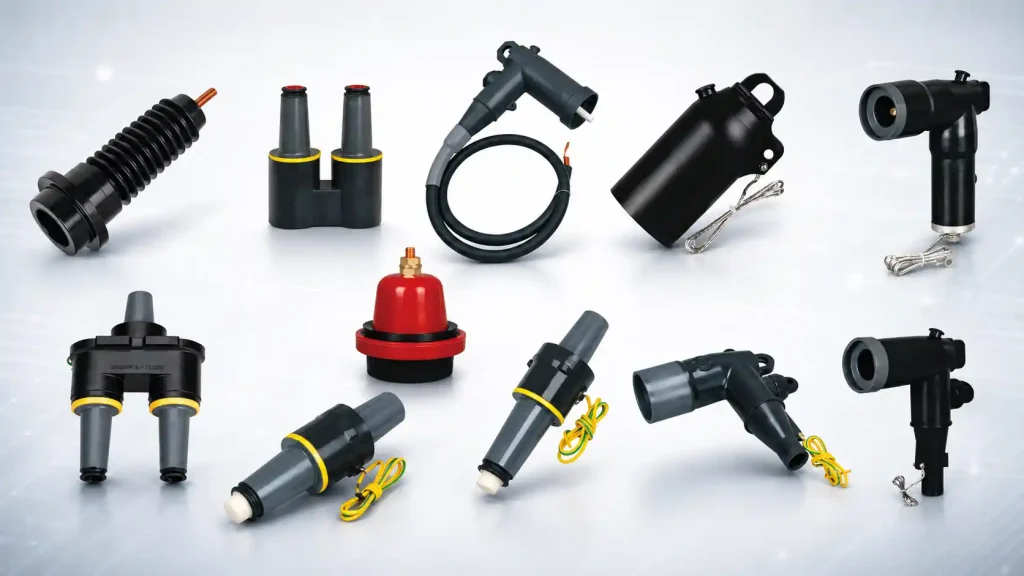
When Should a Grounding Elbow Be Included?
The most useful way to decide is to look at how the cable will be maintained after the system is in service.
The Cable Will Be Grounded Through the 200A Interface During Maintenance
If the approved maintenance procedure requires an isolated cable section to be grounded through its 200A Separable Connector interface, a grounding elbow should be included in the accessory plan.
This may be necessary when maintenance involves a cable section, feeder, transformer connection, or other equipment connected to the circuit.
The grounding elbow can then be kept as a maintenance accessory and installed when the relevant circuit has been isolated and verified de-energized.
It does not need to remain connected during normal service.
A Junction Will Be Used for Isolation and Grounding
200A loadbreak junctions are often installed where several cable connections need to be brought together or where the network needs accessible sectionalizing points.
If the maintenance procedure calls for a cable section to be isolated and grounded at the junction, the grounding elbow should be matched to the corresponding interface.
The required quantity should follow the actual grounding procedure.
A junction with several 200A interfaces does not automatically need one grounding elbow for every port. Some ports may remain in normal service, some may use insulating caps, and only certain positions may be used for temporary grounding.
Equipment May Be Replaced While the Cable Remains in Place
A transformer, switchgear unit, or cable distribution enclosure may eventually need repair or replacement even though the connected cable is still serviceable.
Where the cable terminates through a 200A Separable Connector, the cable may need to remain isolated and grounded while the equipment work is carried out.
If that type of maintenance is expected, it makes sense to confirm the grounding method while the original connection is being specified.
Doing so also allows the interface location and available working space to be considered before the equipment layout is finalized.
The Project Requires a Maintenance Accessory Set
Some customers prefer to receive a defined maintenance accessory set together with the main equipment.
Grounding elbows can be included in this set along with other accessories required during servicing, even though they are not installed during normal operation.
This arrangement is particularly practical for distributors, utilities, OEM customers, and project contractors managing several similar Separable Connector installations.
The grounding elbows can be stocked as maintenance items without forcing their quantity to match the number of loadbreak elbows supplied with the project.
When Is a Grounding Elbow Not the Right Accessory?
The presence of an open 200A interface does not automatically mean that a grounding elbow should be installed.
The electrical condition of that interface matters.
An Energized Spare Port Needs an Insulating Cap
If a compatible 200A interface remains energized but is not connected to a cable, the appropriate accessory is normally an insulating cap with the correct voltage and interface rating.
The insulating cap is intended to insulate and protect the unused energized interface.
A grounding elbow serves a different purpose. It is used only after the circuit has been isolated and confirmed de-energized as part of the approved grounding procedure.
In practical terms:
- an energized spare interface needs suitable insulating protection;
- an isolated circuit that must be temporarily grounded may require a grounding elbow.
Keeping these two situations separate avoids one of the most common mistakes when specifying accessories for a 200A Separable Connector system.
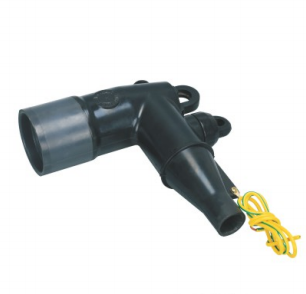
The System Already Has Another Approved Grounding Method
Not every medium-voltage system uses the 200A cable interface as its grounding point.
Some equipment or maintenance procedures provide another designated grounding arrangement.
If the cable is not intended to be grounded through the Separable Connector interface, including a grounding elbow may not be necessary.
The deciding question is therefore not simply whether the project uses 200A loadbreak connectors. It is where the isolated cable will actually be grounded when maintenance is carried out.
Grounding Elbow, Insulating Cap, and Loadbreak Elbow Have Different Jobs
Several components used with a 200A Separable Connector may fit related interfaces, but they operate under very different conditions.
Table 1: Common 200A Accessories and Their Functions
| Accessory | Main Function | Typical Use Condition | For an Energized Spare Port? |
| 200A loadbreak elbow | Connects the cable to equipment | Normal service and approved switching | No |
| Insulating cap | Insulates and protects an unused interface | Spare interface | Yes, when correctly matched |
| Grounding elbow | Provides temporary grounding | Isolated and verified de-energized circuit | No |
The sequence also matters.
Removing a loadbreak elbow does not mean a grounding elbow can immediately be installed. The circuit still has to be isolated and verified according to the approved operating procedure.
After maintenance, the reverse situation also needs attention. If the interface will become an energized spare port, it should receive the correct insulating cap rather than remain connected to the grounding accessory.
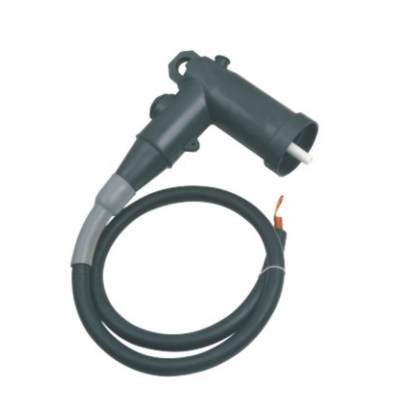
A 200A Rating Alone Does Not Confirm Compatibility
Ordering a grounding elbow simply because the system is rated 200A is not enough.
The voltage class and interface arrangement also need to match.
A grounding elbow may be intended for a particular 200A loadbreak interface, and the equipment-side bushing insert, junction, or feed-through component must be compatible with that same arrangement.
This becomes particularly important with replacement orders.
Two accessories may both be described as 200A components while still belonging to different voltage classes or interface configurations. Their appearance alone is not a reliable basis for selection.
For a new Separable Connector project, the equipment specification and connection drawing usually provide the information needed to confirm the arrangement.
For an existing installation, the model number, bushing marking, existing connector information, system voltage, and clear photos can help us identify the required grounding elbow.
Decide the Grounding Position Before the BOM Is Finalized
The grounding elbow itself may be a small accessory, but its intended connection point should be considered before the overall cable arrangement is fixed.
For a new project, three questions are especially useful:
- Which cable section may need to be isolated?
- Which compatible 200A interface will remain available after isolation?
- Where will the temporary ground actually be applied?
Answering these questions does not necessarily mean adding another interface to the system.
In many cases, an existing bushing insert, junction, or other compatible Separable Connector interface can already provide the required connection point once the circuit has been properly taken out of service.
Make Sure the Grounding Position Can Be Reached
An interface may look suitable on a drawing but become difficult to access once cables and other components are installed.
This is particularly important in compact transformer compartments, cable branch equipment, and switchgear cable sections.
There should be enough working space for the grounding elbow and grounding lead to be applied and removed according to the approved procedure.
If space is limited, we prefer to look at the grounding position together with the normal Separable Connector layout instead of treating it as a separate detail after installation.
Check Whether More Than One Grounding Position Is Needed
A maintenance procedure may require grounding at one location or at several points around the isolated work section.
If more than one point is required, each position should be identified separately.
The number of grounding elbows should follow the actual grounding arrangement rather than the total number of 200A loadbreak elbows, bushings, or junction ports installed in the system.
Does the Grounding Plan Change Between Radial and Loop-Feed Systems?
The grounding elbow itself does not change simply because a network is radial or loop feed. The important difference is how the cable section can be energized and where it can be safely isolated.
A Radial Feed Usually Has a More Direct Isolation Arrangement
In a radial system, the cable section is normally supplied from one direction.
When that section needs maintenance, the source is isolated according to the operating procedure, the cable is verified de-energized, and the required grounding points can then be established.
If a 200A Separable Connector interface is part of the grounding plan, its position can usually be identified directly from the feeder and equipment layout.
There is still no fixed rule that the number of grounding elbows must equal the number of phases or normal operating connectors. The maintenance procedure determines the required quantity.
A Loop Feed Requires Both Supply Directions to Be Considered
A loop-feed system can have more than one possible energizing path depending on the switching condition of the network.
Before temporary grounding is applied, all possible sources to the work section need to be addressed through the approved isolation procedure.
This makes the single-line diagram particularly useful when the Separable Connector accessories are being specified.
The drawing can show where the loop enters and leaves the equipment, where sectionalizing takes place, and which 200A interfaces may be used for grounding.
The grounding elbows can then be assigned to the positions that are actually part of the maintenance plan rather than added to every loop-feed connection by default.
What Should Be Confirmed Before Adding a Grounding Elbow to the BOM?
A few project details are usually enough to avoid most matching problems.
Confirm the Voltage Class and Interface
Start with the system voltage and the 200A interface where the grounding elbow will be connected.
The accessory needs to match the corresponding bushing insert, junction, feed-through component, or other compatible connection point.
For replacement orders, an existing model number or clear interface photos are particularly useful.
Identify the Intended Grounding Point
The project drawing or maintenance plan should make it clear where temporary grounding is expected.
That point might be at a transformer connection, loadbreak junction, cable branch arrangement, or another accessible Separable Connector interface.
Knowing the grounding point is more useful than ordering a grounding elbow only by voltage and current rating.
Set the Quantity From the Actual Grounding Procedure
There is no useful universal rule such as “three-phase system equals three grounding elbows per equipment set.”
The quantity depends on which conductors are grounded, how many grounding locations are required, and how the maintenance team manages its grounding sets.
For distributors, grounding elbows can also be stocked separately from the normal operating connectors and supplied according to project demand.
Confirm the Grounding Lead Arrangement
The grounding elbow is only one part of the complete grounding path.
The grounding lead and the site grounding connection must also suit the intended maintenance arrangement.
When we confirm a grounding elbow for a project, the grounding position and lead arrangement should therefore be considered together rather than leaving the grounding connection to be resolved after delivery.
New Projects and Replacement Orders Need Different Information
A new installation usually comes with drawings and specifications. A replacement order may come with only an old connector, equipment label, and a few photos.
The matching process should reflect that difference.
For a New Project, Start With the Equipment and Cable Layout
For a new Separable Connector project, we can usually review the voltage class, equipment interface, bushing or junction arrangement, cable data, and grounding position before production.
This makes it easier to separate the normal operating components from the maintenance accessories.
Loadbreak elbows and bushing inserts can be confirmed for the operating connection. Insulating caps can be assigned to spare energized interfaces. Grounding elbows can then be listed separately for the positions where temporary grounding is planned.
The final BOM becomes easier to understand, and the maintenance accessories do not get mixed with components that need to be installed during commissioning.
For a Replacement Order, Start With What Is Already Installed
Older installations do not always have complete drawings available.
In that situation, send us the existing model number, equipment nameplate, bushing or connector markings, system voltage, and clear photos of the connection.
These details give us a much better basis for matching than simply asking for a “200A grounding elbow.”
If the existing Separable Connector system has never used a grounding elbow before, the product match is only part of the question. The responsible system operator also needs to confirm that grounding through that interface fits the approved maintenance procedure.
Keep Operating Components and Maintenance Accessories Separate in the BOM
Separating these two categories makes a 200A Separable Connector BOM much easier to use.
Components such as loadbreak elbows, bushing inserts, junctions, and insulating caps normally relate directly to how the system will operate when energized.
Grounding elbows are different. They may spend most of their service life in the maintenance kit and only be used when a cable section is taken out of service.
Their quantities therefore do not need to match.
A project may use dozens of loadbreak elbows but require only a limited number of grounding sets. A maintenance team may also need additional grounding elbows later without purchasing any new cable elbows.
For distributors and project contractors, this separation also makes repeat orders clearer.
Plan the Grounding Accessory With the Complete 200A Connection
A grounding elbow should not be selected in isolation from the rest of the connection.
Depending on the project, we may need to look at the equipment bushing, bushing insert, loadbreak elbow, cable data, junction arrangement, insulating caps, grounding accessories, and surge protection together.
Not every 200A Separable Connector system needs all of these components.
The important point is that each accessory matches the electrical rating, interface, operating condition, and intended use of that position.
Reviewing the complete arrangement also helps avoid two very different specification mistakes: using a grounding elbow where an insulating cap is actually required, or completing the operating connection without providing the grounding accessory required by the maintenance plan.
We Manufacture the Separable Connector and Related 200A Accessories
At YIEOU, we manufacture Separable Connector products together with the medium-voltage cable accessories used around the same connection system.
Our 200A product range allows us to work with the loadbreak connection and related accessories as one project rather than asking customers to match each item independently.
For a new project, we can work from the equipment specification, cable data, single-line diagram, and connection drawing.
For a replacement order, we can start with existing models, interface information, and product photos.
When a grounding elbow is required, we confirm the voltage class, 200A interface, intended grounding position, and related connection arrangement before production.
The same approach is useful for repeat orders. Once the Separable Connector configuration has been confirmed for a particular equipment design or project, keeping the interface and accessory specification consistent makes later purchasing much easier.
Include the Grounding Elbow When the Maintenance Plan Requires It
A grounding elbow belongs in a 200A Separable Connector system when the maintenance plan requires an isolated cable circuit to be temporarily grounded through a compatible 200A interface.
It is not required simply because the project uses 200A loadbreak elbows, and it should not be used in place of an insulating cap on an energized spare port.
The best time to confirm the requirement is while the equipment interface, cable connection, junction arrangement, spare ports, and maintenance method are still being reviewed together.
If you are preparing a new project, replacement order, or repeat order, send us the system voltage, interface information, equipment details, cable data, and intended grounding position. We can match the Separable Connector and the required grounding, insulating, bushing, and junction accessories around the same connection arrangement.
FAQ
Does every 200A Separable Connector system need a grounding elbow?
No. It is needed when the maintenance procedure requires temporary grounding through a compatible 200A interface.
Is a grounding elbow used during normal operation?
No. It is a maintenance accessory used after the circuit has been isolated and verified de-energized.
Can a grounding elbow replace an insulating cap?
No. An insulating cap protects an unused compatible interface. A grounding elbow is used for temporary grounding.
Can a grounding elbow be connected to an energized port?
No. The circuit must first be isolated and confirmed de-energized according to the approved procedure.
Can any 200A grounding elbow fit any 200A interface?
No. The voltage class and interface arrangement also need to match.
Does a three-phase system always need three grounding elbows?
No. The quantity depends on the actual grounding procedure and the required grounding points.
Does every loadbreak junction need a grounding elbow?
No. Only the positions included in the maintenance grounding plan need them.
Can a grounding elbow be supplied separately?
Yes. It can be ordered as a separate maintenance accessory once the correct voltage class and interface have been confirmed.
Should grounding elbows be listed separately in the BOM?
They often can be. Separating maintenance accessories from normal operating components makes the BOM easier to understand.
What should I send YIEOU when ordering a grounding elbow?
Send the system voltage, interface or equipment details, intended grounding position, quantity, and existing model or photos when available.