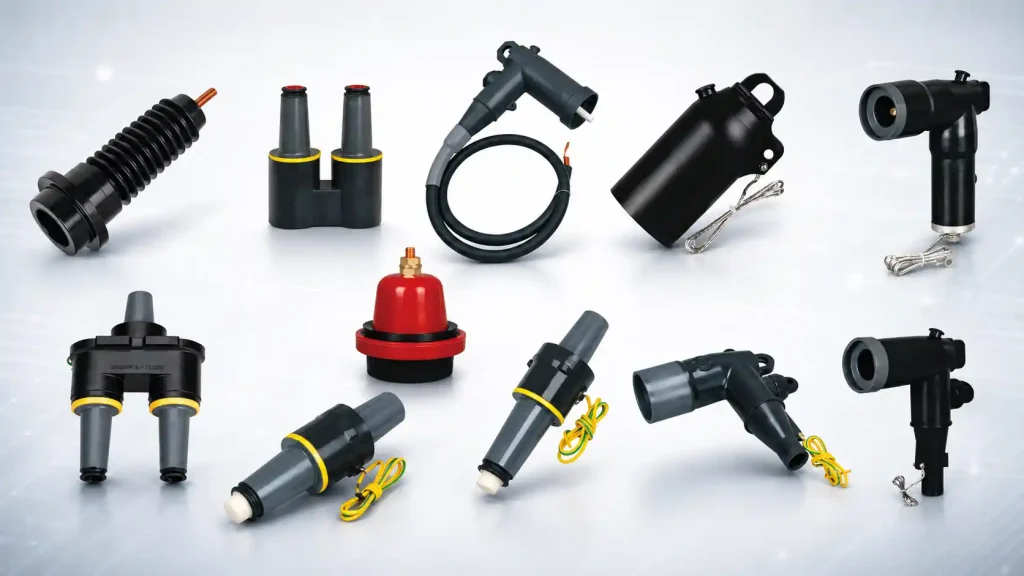
Yes. A properly rated 200A Loadbreak Separable Connector is designed to make or break a circuit while carrying load current.
But the word loadbreak is important.
It does not mean that every separable connector can be disconnected while energized, nor does it mean the connector can be pulled apart casually whenever current is flowing. The connector, mating bushing interface, system voltage, current level, installation condition, and operating procedure all need to support loadbreak operation.
For medium-voltage distribution projects, this distinction affects both connector selection and the way the system can later be operated and maintained.
At YIEOU, we manufacture 200A loadbreak Separable Connector systems for medium-voltage cable connections, together with compatible bushings, junctions, insulating caps, grounding accessories, and other components. When loadbreak capability is required, we look at the complete connection rather than the elbow alone.
What Does “Loadbreak” Actually Mean?
A loadbreak Separable Connector is designed with an interface that allows the circuit connection to be opened or closed under its specified operating conditions while load current is present.
This is different from a connection that must first be de-energized before it can be separated.
The distinction is easy to overlook because both products may appear to be removable cable connectors. Electrically, however, they serve different operating purposes.
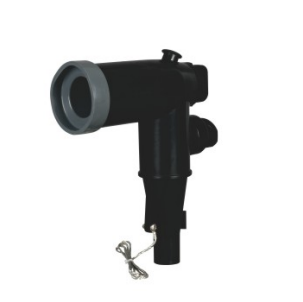
A typical 200A loadbreak connection includes:
- a loadbreak elbow connector;
- a compatible 200A loadbreak bushing or bushing insert;
- the medium-voltage cable and conductor connection;
- grounding and shielding components;
- other accessories required by the equipment layout.
The loadbreak function depends on these parts working as a coordinated interface.
The elbow cannot provide loadbreak capability by itself if the mating equipment interface is not designed for the same purpose.
Why Is a 200A Loadbreak Connector Able to Interrupt Load Current?
Separating an energized medium-voltage connection is very different from unplugging a low-voltage connector.
When two energized contacts begin to separate, an electrical arc can form between them. A 200A Loadbreak Separable Connector therefore uses a connection structure specifically intended to control the interruption process during an approved loadbreak operation.
This is one reason the probe and mating bushing interface are important parts of the system rather than simple mechanical contacts.
The connector must separate the electrical path in a controlled way while maintaining the required insulation and shielding around the connection.
Once the elbow has been removed, the remaining energized interface must also be handled according to the electrical system design. Depending on the application, an insulating cap, parking stand, feed-through device, grounding accessory, or another approved component may be required.
For that reason, loadbreak capability should be considered as a system function, not simply a feature of one elbow connector.
Does “200A” Mean It Can Always Be Disconnected at 200A?
Not necessarily.
The 200A designation describes the current class of the connector system, but it should not be interpreted as permission to interrupt any circuit simply because the measured current is below 200A.
Several conditions still need to be confirmed.
The Connector Must Actually Be a Loadbreak Design
This is the first distinction.
A 200A loadbreak Separable Connector is designed for loadbreak operation.
A deadbreak connector is not intended to be separated while carrying load current.
The words loadbreak and deadbreak therefore matter just as much as the current rating.
The Mating Interface Must Be Compatible
A loadbreak elbow must be connected to the correct loadbreak bushing interface.
Matching only the current rating is not enough.
Two products may both be marked 200A but belong to different voltage classes, interface arrangements, or connector systems.
Before manufacturing or supplying a 200A connection set, we normally need to confirm the equipment interface as well as the cable-side requirement.
System Voltage Must Match the Connector
A 200A Separable Connector may be used in different medium-voltage classes.
The connector, bushing, cable, and equipment therefore need to belong to the same electrical system.
A 200A current rating does not replace the need to confirm voltage class.
This is particularly important when replacement connectors are being purchased for existing transformers, cable branch boxes, or other installed equipment.
The Actual Operating Condition Still Matters
Loadbreak capability is intended for specified switching and sectionalizing operations.
It should not be treated as a general-purpose method for repeatedly switching a circuit simply because the connector is removable.
The operating procedure, equipment condition, system configuration, and local safety requirements still apply.
Loadbreak Does Not Mean “Safe to Pull by Hand”
This is one of the most important points for anyone reading a product description that says 200A loadbreak.
The connector may be designed to interrupt load current, but the operation itself is still a medium-voltage switching operation.
It is not a hand-operated plug.
Loadbreak operation should only be performed by qualified personnel using the approved insulated operating equipment, protective equipment, and procedures required for the installation.
If the condition of the connector, bushing, cable, equipment, or operating position is uncertain, the circuit should be de-energized before the connection is separated.
From a purchasing perspective, the practical conclusion is simple:
Loadbreak describes the electrical operating capability of the connector system. It does not remove the safety requirements of medium-voltage operation.
Where Is Loadbreak Capability Useful?
The advantage of a 200A Loadbreak Separable Connector is not simply that the cable can be removed.
Its value becomes clearer in medium-voltage networks where circuits may need to be isolated, rearranged, or sectionalized without rebuilding the cable termination.
Pad-Mounted Transformers
Underground distribution systems commonly connect medium-voltage cables to pad-mounted transformers through separable interfaces.
A 200A loadbreak connection can give the network an accessible sectionalizing point when the transformer and cable system are designed around the same interface.
This can be useful where feeders need to be isolated or reconfigured during approved switching operations.
Cable Branch Boxes
Cable branch boxes may contain several separable connection points.
A 200A Separable Connector arrangement can support radial feeds, loop feeds, cable branches, or sectionalizing positions depending on the system layout.
In these applications, the loadbreak capability is especially useful because the connection point is part of the distribution network rather than simply a permanent cable termination.
Underground Distribution Networks
Underground distribution circuits often use separable interfaces because cables cannot be switched or rearranged in the same way as exposed overhead conductors.
A coordinated loadbreak system provides defined connection points for network operation and maintenance.
Sectionalizing Points
Some medium-voltage networks are designed with specific locations where one part of the feeder can be isolated from another.
A 200A loadbreak interface can form one of these operating points when the circuit current and equipment design are suitable.
200A Loadbreak and 600A Deadbreak Are Not the Same Type of Connection
This comparison is particularly useful when specifying a Separable Connector.
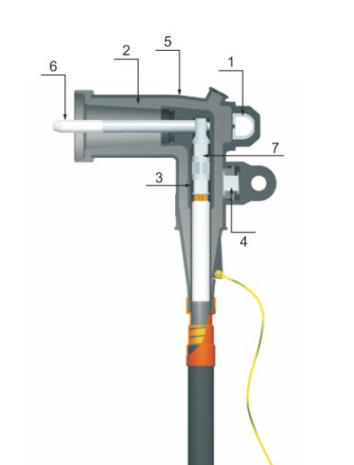
A 200A loadbreak elbow and a 600A deadbreak connector may both be used between medium-voltage cables and transformers or distribution equipment, but their operating roles are different.
| Connection Type | Typical Operating Category | Under-Load Separation |
| 200A loadbreak connector | Loadbreak interface | Designed for approved loadbreak operation |
| 600A deadbreak connector | Deadbreak interface | Circuit should be de-energized before separation |
The difference should not be reduced to 200A versus 600A.
Current capacity is only one part of the decision.
The system designer also needs to consider whether the connection needs to function as an operating point.
If loadbreak switching is required, that requirement should be identified before the connector and equipment interface are selected.
If the connection is intended primarily as a higher-current permanent or semi-permanent cable termination, a deadbreak arrangement may be more appropriate.
Can a 200A Loadbreak Elbow Be Used with Any 200A Bushing?
No.
This is another reason we recommend checking the complete Separable Connector system rather than ordering an elbow based only on the current marking.
The following relationships need to match:
Equipment → bushing or bushing insert
The equipment-side component needs to match the transformer, switchgear, cable branch equipment, or other apparatus interface.
Bushing → loadbreak elbow
The bushing and elbow need to use compatible 200A loadbreak interfaces.
Loadbreak elbow → cable
The cable conductor and cable insulation dimensions need to match the connector configuration.
These relationships are connected.
A mismatch at any one point can prevent the complete system from functioning as intended.
For replacement projects, photographs and old connector markings can be useful, but equipment drawings and cable information provide a more reliable basis for confirming the connection.
What Should Be Checked Before Ordering a 200A Loadbreak Separable Connector?
There is no need to make the inquiry complicated.
A few pieces of project information usually tell us much more than a long model list.
System Voltage
Start with the rated voltage of the distribution system.
This determines the electrical class of the 200A Loadbreak Separable Connector and related accessories.
Equipment Connection
Tell us where the connector will be installed.
For example:
- transformer;
- cable branch box;
- sectionalizing equipment;
- underground distribution equipment;
- another compatible medium-voltage apparatus.
If an equipment drawing or interface specification is available, it is particularly useful.
Cable Information
The conductor size is important, but it should not be the only cable information supplied.
Cable type and insulation dimensions may also affect the correct connector configuration.
This becomes especially important when matching replacement connectors to cables from different manufacturers.
Radial or Loop Arrangement
The network arrangement determines whether the project only requires an elbow-to-bushing connection or also needs junctions, additional interfaces, insulating caps, grounding accessories, or other components.
A simple single-line diagram can often clarify this immediately.
Is Loadbreak Operation Actually Required?
This question is easy to miss.
If the connection needs to be used as an operating or sectionalizing point, that should be stated clearly when the system is specified.
We can then check the 200A loadbreak interface and related accessories around that operating requirement.
What Happens After the Connector Is Disconnected?
Removing the elbow is only one part of the operation.
The cable side and equipment side still need to be placed in their correct system conditions.
For example, an exposed energized loadbreak interface cannot simply be left untreated.
Depending on the network arrangement, the system may require an approved insulating cap or another compatible accessory.
If the circuit has been isolated for maintenance, grounding arrangements may also form part of the work procedure.
This is why accessories such as insulating caps, grounding elbows, junctions, and parking devices should not be treated as unrelated products.
They support the different operating conditions that can occur around the same 200A Separable Connector interface.
Can a Loadbreak Connector Be Used as a Normal Switch?
A 200A Loadbreak Separable Connector provides switching capability, but that does not automatically make it the same thing as a dedicated switchgear switching mechanism.
The connector is typically used where the network design requires a separable and sectionalizable cable connection.
For frequent routine switching, the system design should consider whether dedicated switching equipment is more appropriate.
This distinction matters because the purpose of a loadbreak elbow is to provide a cable connection with controlled loadbreak capability—not to replace every other switching device in a medium-voltage distribution system.
Why Connector Condition Matters Before a Loadbreak Operation
A connector that was correctly selected when installed can still be affected by service conditions over time.
Before an approved loadbreak operation, the condition of the connection and associated equipment should therefore be considered.
Possible concerns include:
- contamination around the interface;
- physical damage;
- deterioration of the elbow body;
- damage to the operating eye;
- questionable grounding or shielding;
- abnormal overheating;
- damaged mating equipment;
- an unknown replacement history.
Where the condition cannot be confirmed, de-energizing the circuit before separation provides a more conservative approach.
The existence of a loadbreak rating should never be used to ignore visible problems with the installed connection.
Replacement Orders Need More Than the Old “200A” Marking
A common replacement request is simply:
“We need the same 200A elbow.”
That is a useful starting point, but it is not always enough.
A replacement 200A Loadbreak Separable Connector should still be checked against:
- voltage class;
- loadbreak interface;
- existing bushing;
- cable conductor;
- cable insulation dimensions;
- system configuration.
If the original connector has been in service for many years, the exact old model may no longer be the most useful reference.
Clear photographs of the elbow, bushing, equipment interface, product markings, and cable information usually make the matching process much easier.
The objective is not simply to find a connector that looks similar.
It is to maintain the correct electrical and mechanical interface throughout the connection.
We Match the 200A Loadbreak Connection as a Complete System
At YIEOU, we manufacture 200A loadbreak Separable Connector products together with the supporting components used around the same medium-voltage interface.
For a new project, this allows the elbow, bushing interface, junction arrangement, insulating accessories, and grounding requirements to be considered together.
For replacement orders, we can work from the existing equipment information, cable specification, product markings, drawings, and photographs to confirm the required connection.
This is especially useful for distributors, transformer manufacturers, switchgear manufacturers, utilities, and project contractors that need repeatable connector configurations across different projects.
The important point is not to add unnecessary components.
It is to make sure each part of the Separable Connector system belongs to the same electrical and interface arrangement.
FAQ
Can a 200A Loadbreak Separable Connector be disconnected while current is flowing?
Yes. A correctly rated 200A loadbreak connector is designed for approved loadbreak operation while carrying load current. The complete interface and operating conditions must also be suitable.
Can an electrician pull a 200A loadbreak elbow off by hand?
No. It is a medium-voltage connection and requires qualified personnel, approved insulated operating equipment, PPE, and the applicable operating procedure.
Is every 200A Separable Connector loadbreak?
No. The current rating alone does not define the operating category. Always confirm whether the connector and mating interface are specifically designed as loadbreak components.
Can a 600A deadbreak connector be disconnected under load?
No. A deadbreak connection is intended to be separated only after the circuit has been de-energized according to the applicable operating procedure.
Does the bushing also need to be loadbreak rated?
Yes. Loadbreak capability depends on the complete mating interface. A loadbreak elbow should be used with the correct compatible loadbreak bushing or bushing insert.
Can a 200A loadbreak connector replace a medium-voltage switch?
Not in every application. It can provide an operating and sectionalizing point, but systems requiring frequent switching may use dedicated switching equipment.
What information should I send YIEOU for a replacement 200A connector?
System voltage, cable specification, equipment type, existing connector markings, and clear photographs are good starting points. An equipment drawing or single-line diagram is also helpful when available.
A 200A Loadbreak Connector Can Break Load—But the Whole Connection Must Support It
So, can a 200A Loadbreak Separable Connector be disconnected under load?
Yes.
That capability is one of the main differences between a properly designed 200A loadbreak Separable Connector and a deadbreak connection.
But loadbreak operation depends on more than the word “200A” printed on a product.
The elbow, bushing interface, voltage class, cable connection, equipment condition, network arrangement, and operating procedure all need to be appropriate for the application.
For new projects or replacement orders, send us the system voltage, cable information, equipment connection, and available drawings or photos. We can confirm the 200A Separable Connector arrangement together with the matching bushing and accessories before production.