
When a distribution cabinet is due for planned work, the temporary supply connection can become the point that determines which bypass equipment will fit. The cabinet may have a T-shaped equipment interface, while the temporary cable uses a quick connection. Elsewhere, the available attachment may be a terminal rather than a separable bushing. These are different physical connections even when the voltage markings look similar. A Separable Connector can form part of the transition, but the complete adapter cable needs the correct end at each side and the right duty throughout its length.
Quick Answer
A Separable Connector links a temporary bypass supply when it matches the existing equipment interface and forms part of an adapter assembly compatible with the bypass cable or device. The two ends do not have to share the same shape. Each end does need to suit its intended mating component, voltage class, current duty and permitted operating conditions.
At YIEOU, we manufacture bypass operation adapter cables for 10kV/15kV distribution applications. Our range includes double quick-plug cables, T-head to quick-plug arrangements and DT terminal to quick-plug configurations. These products provide defined transitions between distribution equipment and temporary bypass equipment. They do not make an ordinary equipment connection suitable for unrestricted live plugging or replace the switching and work procedures of the bypass system.
Match the two ends to their different jobs
A temporary bypass arrangement connects existing distribution equipment with a separate cable route and the relevant bypass devices. At the equipment end, the available interface determines the connection. At the temporary-system end, the bypass equipment determines it. Selecting a Separable Connector from only one end leaves half of this relationship unresolved.
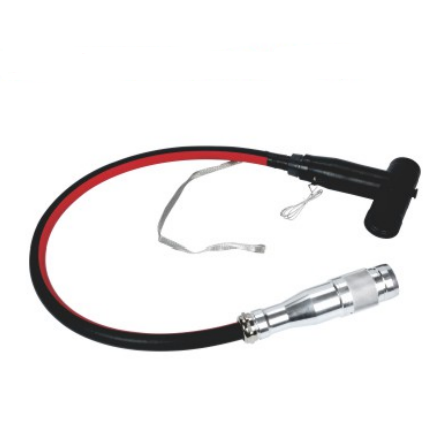
For an equipment interface intended for a suitable T-head connection, we offer an adapter cable with a T-type front-access end and a quick connection at the other end. The cable bridges two defined interfaces. The T-head remains an equipment-side connection with its own mating requirements. The quick end belongs to the corresponding bypass equipment system.
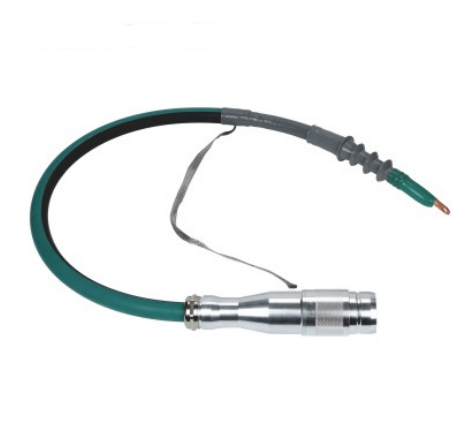
Where a distribution connection instead uses a DT terminal, our DT to quick-plug arrangement provides a different transition. Its terminal connection and its quick interface are mechanically different. They cannot be treated as alternative shapes for the same attachment point. The equipment must have the corresponding terminal connection, with the appropriate contact arrangement and installation space.
Our Separable Connector range supports compatible equipment-side cable interfaces, while our bypass cable configurations address the transition to temporary equipment. Thinking about the two ends separately makes the assembly easier to understand. The result still needs to operate as one complete connection, including its cable, insulation, shielding and grounding provisions. For utility engineering contractors, the actual attachment at each device determines which adapter configuration belongs in the temporary route.
An adapter changes the interface arrangement, not the network rating
An adapter cable with a Separable Connector makes a specified physical transition. It does not raise the voltage capability of the components attached to it or increase the current capacity of a smaller outlet. A Separable Connector at one end can have a substantial current rating while another component in the path imposes a lower limit.
Our bypass adapter product range includes specified 200A and 630A configurations. Those are product options, rather than a statement that every supplied cable carries either current without a configuration change. The actual cable assembly, interfaces and connected devices need the intended rating. A mixed set cannot be assessed by reading the largest number printed on one part.
The cable between the Separable Connector and the other end also matters. Its conductor, insulation and supplied construction form part of the assembly’s electrical capability. A short route does not make an underspecified cable suitable, and a robust-looking contact cannot compensate for a cable configuration that does not match the duty. We offer these products as defined connection configurations for the corresponding distribution application.
The same principle applies to voltage. A Separable Connector used in a 10kV/15kV bypass arrangement belongs to that specified voltage application. It cannot be carried over to a higher-voltage circuit merely because the contact appears to engage. Insulation requirements involve the complete mating interface and cable assembly, not only the visible distance between exposed metal parts.
A practical mismatch can occur when a suitable equipment-side accessory is connected to a temporary cable selected for another bypass device. The first end can fit correctly while the second has a different contact or insulating profile. A Separable Connector cannot resolve that difference through its own rating. The adapter needs the appropriate supplied end configuration on both sides, so the assembly remains compatible from the fixed equipment to the bypass device.
Quick connection does not define the switching function
The words quick plug describe a connection feature. They do not, on their own, prove that an interface can make or break load current. Similarly, a Separable Connector can be removable without being a loadbreak device. The permitted operation depends on the specified product, its mating system and the complete bypass arrangement.
This distinction is particularly relevant where the equipment end is a deadbreak interface. The temporary cable may connect to bypass equipment used in continuity-of-supply work, but that purpose does not change the equipment interface’s own operating limits. A deadbreak connection remains subject to the required de-energised and isolated condition when it is separated.
Loadbreak capability also has a defined scope. A matched 200A loadbreak system can support its specified operations under rated conditions and the proper procedure. It does not give permission to unplug any accessory on a live circuit. A 600A deadbreak connection and a European-style 630A connection cannot inherit that function because they occupy a similar position in a cabinet.
For a Separable Connector in bypass service, the useful product distinction is therefore between carrying current, providing insulation and performing a permitted switching operation. These functions may belong to different components. The bypass switch has its own role, the adapter supplies its connection role, and the equipment-side accessory retains its specified limits. Keeping those roles clear prevents a convenient connection feature from becoming an unsupported operating assumption.
Choose the transition that the equipment actually presents
An existing cabinet may present a bushing interface, a terminal attachment or a connection point intended for a particular adapter. Those details determine the product direction. A Separable Connector cannot simply replace a terminal connection because a separable arrangement seems more convenient for temporary work.
Our T-head to quick-plug cable suits the corresponding front-access equipment arrangement. Its practical role is to connect compatible distribution equipment to the temporary bypass connection. The position of the equipment interface affects cable departure and access, so the adapter has to suit the cabinet as installed, including adjacent phases and other accessories.
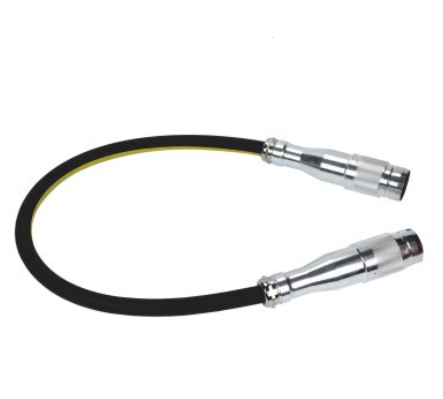
Our double quick-plug cable has a different role: connecting compatible bypass devices through quick interfaces at both ends. It is useful where both mating points already belong to that system. It does not independently solve the transition from an unrelated transformer bushing or a bolted equipment terminal.
| Available connection | Suitable transition direction | Main compatibility issue |
|---|---|---|
| Corresponding T-type front-access interface | T-head to quick-plug adapter cable | Equipment mating interface and bypass-end system |
| Suitable DT terminal attachment | DT terminal to quick-plug adapter cable | Terminal contact, mounting and quick-end compatibility |
| Two compatible bypass-device interfaces | Double quick-plug adapter cable | Both quick interfaces and complete cable rating |
| Existing fixed deadbreak connection | Product-specific equipment connection | Isolation requirements and approved attachment arrangement |
These directions clarify why adapter choice begins at the actual connection point. They are not instructions for assembling or energising a bypass. The equipment configuration and authorised procedure for the Separable Connector determine which connection can be used and when work on it can take place.
An equipment change can therefore alter the adapter requirement even when the temporary cable route remains the same. Replacing a cabinet with one that has another interface may leave a previously used cable unable to mate. The relevant Separable Connector arrangement follows the new equipment, while the bypass-end connection still follows the temporary device. Treating the old assembly as automatically reusable would overlook that changed boundary.
Cable length affects the connection at each end
The temporary cable route needs to reach its attachment points without putting sustained tension on the interfaces. Extra length can create handling and routing problems, while insufficient length can pull the cable against the cabinet entrance. A Separable Connector needs a supported cable approach that leaves the mating component properly aligned.
We offer adapter cable configurations with cable length considered for the application. The useful length is measured along the intended route, including the final approach to both connection points. A direct distance between two enclosures can miss bends, barriers and the space needed to keep the cable clear of doors or equipment supports.
The cable’s weight is another practical factor. A connector body can fit the bushing correctly while a hanging cable applies a continuous bending force. Support close to the equipment needs to accommodate the route without forcing the cable into a tighter bend than its construction permits. The adapter end then remains a connection rather than becoming the main mechanical support.
At the quick end, access to the specified locking or connection features also needs to remain available. A Separable Connector assembly may be installed in limited space, but the temporary arrangement still needs room for its intended handling and inspection. A cable positioned tightly between obstacles can make a sound-looking initial fit difficult to maintain during the work period.
Repeated handling makes surface condition important
Temporary equipment is transported, stored and connected for individual jobs. That handling exposes its interfaces to dirt, moisture and mechanical damage. A Separable Connector that has the correct rating can still be unsuitable for service if its insulating surface is damaged or its contacts are contaminated.
The Separable Connector mating surfaces have different tasks. Conductive contacts need the specified contact condition, while the insulating surfaces need clean, undamaged engagement. Dust trapped against a contact can affect the current path. Material trapped at the insulation interface can disturb the intended fit. Neither problem is resolved by forcing the parts together more firmly.
Our adapter cable range uses insulated and screened connection structures for the corresponding medium-voltage application. Those structures need the correct mating components and the specified grounding arrangement in service. Screening is part of the electrical construction, rather than a substitute for the required condition of the underlying insulation and contact surfaces.
The Connector at either end also needs protection while disconnected. Suitable covers and storage arrangements help preserve the surfaces between uses. An operating insulating accessory and a transport cover can have different purposes, so a cover’s presence alone does not establish suitability for an energised interface. The intended use remains product-specific.
A Separable Connector used temporarily deserves the same attention to visible cracks, discharge marks and abnormal heating as a permanent connection. Repeated connection cycles do not make these findings normal wear to ignore. Their significance depends on the component and condition, with assessment carried out before the assembly returns to its intended duty.
The temporary route has its own environmental limits
A cable compartment may be sheltered while the temporary cable crosses an exposed working area. Rain, construction dust or vehicle activity can therefore affect different parts of the same assembly differently. A sealed Separable Connector protects its specified interface; it does not establish the protection level of the complete temporary installation.
At a cabinet entrance, the cable route needs to avoid sharp edges and door pressure. Away from the cabinet, the assembly needs suitable physical protection for the work location. These are direct conditions of cable and accessory use. They do not require treating the connector as a design solution for every hazard elsewhere on the site.
Our bypass adapter products define normal operating conditions and identify special conditions that require a suitable configuration. Severe contamination, unusual corrosion, high vibration or conditions outside the product limits need specific attention. The term outdoor use does not remove those boundaries, and temporary service does not make environmental exposure unimportant.
Grounding provisions also need to remain effective across the temporary arrangement. A screen connection left unsupported or strained by cable movement can compromise the intended assembly. The Separable Connector, adapter cable and associated equipment form a connected system in this respect. Their individual features only serve their purpose when the specified electrical connections remain intact throughout the work.
A useful bypass connection remains identifiable and inspectable
During planned distribution work, several cable ends may be close to one another. Keeping the actual adapter configuration identifiable helps distinguish equipment interfaces, quick connections and other terminals. This is especially useful when assemblies look alike but have different ratings or end arrangements. A Separable Connector needs to retain its product identity as well as its physical condition.
Our double quick-plug, T-head and DT adapter configurations serve different attachment situations. At YIEOU, we manufacture these defined arrangements rather than treating all temporary cables as interchangeable leads. The finished assembly needs to preserve the intended cable type, end components and grounding provisions. Replacing one end informally can change more than the visible attachment shape.
Factory verification and site inspection have different scopes. Our manufacturing support includes dimensional and electrical checks, with high-voltage and partial-discharge testing capabilities according to the relevant product requirements. Those checks support the supplied assembly. They do not establish the present condition of a cable after transport, repeated use or damage at a work site.
The inspection also needs to relate each end to its intended job. On a terminal-ended cable, that includes the terminal and adjacent cable condition. On a quick-ended cable, it includes the relevant contact, insulating surface and connection features. A Separable Connector body can appear undamaged while another part of the same adapter needs attention. The complete assembly remains the useful unit for deciding whether the temporary connection is fit for its next application.
A Separable Connector in a temporary bypass is most useful when the equipment match, cable route and operating function are all clear. For utility distribution maintenance, our adapter range supplies the physical transition between corresponding equipment and bypass interfaces. The complete system and its authorised work procedure determine how that connection contributes to continuity of supply.
FAQ
Does every Separable Connector support live unplugging?
No. Separable describes the interface structure, while loadbreak capability is a specific operating function. Deadbreak accessories require the specified de-energised and isolated condition before separation.
When is a double quick-plug cable appropriate?
It suits a connection between two compatible bypass-device quick interfaces. A separate equipment transition is needed where the available attachment is a different bushing or terminal system.
Can a T-head adapter connect to any T-shaped bushing?
No. The actual equipment interface, voltage configuration and contact arrangement govern compatibility. Similar external shapes do not prove that the contacts and insulation surfaces can mate correctly.
Does a 630A marking make the whole bypass suitable for 630A?
No. The complete path includes cable, both interfaces and connected devices. Each component and the installation conditions need to support the intended duty, with the limiting element governing the arrangement.
Why does cable length matter for a Separable Connector?
The route needs enough length for the intended bends and approach without pulling on either connection. Uncontrolled surplus length can also obstruct access or create handling problems.
Can a temporary adapter be used without checking it after storage?
Storage does not establish the present condition of contacts, insulation or cable. The assembly needs assessment under the applicable product and work requirements before it returns to service.