
Introduction
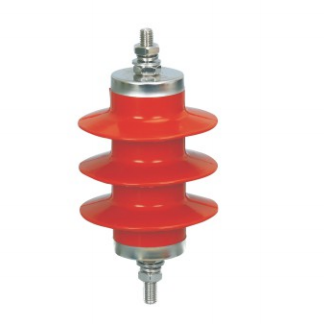
In the complex landscape of modern power systems, surge protection stands as a critical component for ensuring equipment longevity, operational continuity, and safety. Among the various protective devices available, the zinc oxide arrester series HY(YH)5WZ-3~6kV has emerged as a leading solution for medium-voltage applications. This comprehensive guide delves into the technical specifications, operational principles, applications, and advantages of this advanced surge protection technology, providing valuable insights for electrical engineers, procurement specialists, and maintenance professionals.
Understanding Zinc Oxide Arresters
Basic Principles and Evolution
The evolution of overvoltage protection technology has seen significant advancements from traditional silicon carbide arresters to the modern zinc oxide (ZnO) varistors. The HY(YH)5WZ-3~6kV series represents the pinnacle of this technological progression, leveraging the unique nonlinear characteristics of zinc oxide ceramics.
Unlike traditional arresters that rely on spark gaps and silicon carbide elements, modern metal oxide arresters utilize zinc oxide grains formulated with other metal oxides (such as cobalt, manganese, and antimony trioxide) to achieve highly nonlinear voltage-current characteristics. This allows them to conduct large currents when voltage exceeds a certain threshold while presenting high resistance to normal system voltages.
Key Components of HY(YH)5WZ-3~6kV Arresters
The HY(YH)5WZ-3~6kV arrester series consists of several critical components working in harmony:
- Zinc oxide valve blocks: The heart of the arrester, providing the nonlinear voltage-current characteristics
- Housing: Typically made of silicone rubber or porcelain for environmental protection
- Pressure relief system: Designed to safely discharge internal pressure during extreme fault conditions
- Sealing mechanism: Ensuring long-term hermeticity to prevent moisture ingress
- Fittings and hardware: For proper electrical and mechanical connection
Technical Specifications of HY(YH)5WZ-3~6kV Series
Detailed Electrical Parameters
The HY(YH)5WZ-3~6kV series is engineered to meet the rigorous demands of medium-voltage distribution systems. Below is a comprehensive overview of its electrical specifications:
| Parameter | HY(YH)5WZ-3kV | HY(YH)5WZ-6kV | Test Standard |
|---|---|---|---|
| Rated Voltage (kV) | 3 | 6 | IEC 60099-4 |
| Maximum Continuous Operating Voltage (kV) | 2.4 | 4.8 | IEC 60099-4 |
| Rated Frequency (Hz) | 50/60 | 50/60 | IEC 60099-4 |
| Lightning Impulse Discharge Current (kA) | 5 | 5 | IEC 60099-4 |
| Switching Impulse Discharge Current (A) | 125 | 125 | IEC 60099-4 |
| Reference Voltage (kV) | ≥4.2 | ≥7.6 | IEC 60099-4 |
| Leakage Current (µA) | ≤20 | ≤20 | IEC 60099-4 |
| Pressure Relief Rating (kA) | 8 | 8 | IEC 60099-4 |
| Mechanical Load (N) | 500 | 500 | IEC 61462 |
Environmental and Mechanical Specifications
Beyond electrical parameters, the HY(YH)5WZ-3~6kV series excels in environmental resilience:
- Operating Temperature Range: -40°C to +40°C
- Altitude Capability: Up to 2000 meters above sea level
- Pollution Level: Suitable for levels I-IV as per IEC 60815
- Sealing Performance: Hermetic with IP68 protection rating
- Material Options: Silicone rubber or porcelain housing
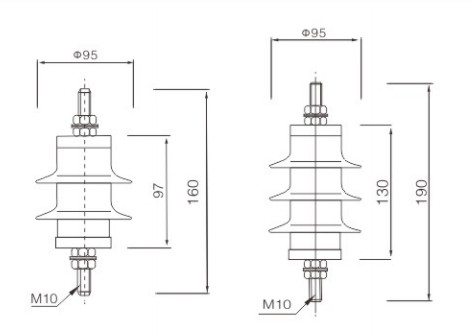
- Weight: Approximately 3-5 kg depending on configuration
Working Principles and Performance Characteristics
Nonlinear Voltage-Current Characteristics
The core innovation behind the HY(YH)5WZ-3~6kV series lies in its highly nonlinear voltage-current characteristics. Under normal operating conditions, the arrester presents high resistance (megohms), limiting leakage current to microampere levels. However, when voltage exceeds the protective level, resistance drops dramatically (to ohms), allowing surge currents to be safely discharged to ground.
This behavior can be mathematically represented by the equation:
I = K × V^α
Where:
- I is the current through the arrester
- V is the voltage across the arrester
- K is a constant dependent on material composition
- α is the nonlinear coefficient (typically 25-35 for ZnO varistors)
Discharge and Energy Absorption Capabilities
The HY(YH)5WZ-3~6kV series demonstrates exceptional energy absorption capabilities:
- Lightning Impulse Protection: Effectively handles 8/20µs current waves up to 5kA
- Switching Surge Protection: Manages long-duration switching surges with energy absorption up to 2kJ/kV
- Thermal Stability: Designed for continuous operation under maximum system voltage without thermal runaway
Long-Term Performance and Aging Characteristics
Unlike traditional arresters, zinc oxide types like the HY(YH)5WZ-3~6kV exhibit minimal aging when properly applied:
- Stable Reference Voltage: Maintains protective characteristics throughout service life
- Low Degradation Rate: Typically less than 5% voltage change over 20 years
- No Need for Periodic Disconnection: Unlike gapped arresters, continuous connection doesn’t accelerate aging
Key Advantages of HY(YH)5WZ-3~6kV Series
Superior Protection Performance
The HY(YH)5WZ-3~6kV series offers several protection advantages:
- Lower Protective Levels: Compared to traditional silicon carbide arresters, providing better equipment protection
- Faster Response Time: Nanosecond response to overvoltage events
- Energy Handling Capability: Superior energy dissipation without damage
- No Follow Current: Automatically returns to high-resistance state after surge dissipation
Enhanced Reliability and Longevity
- Proven Track Record: Decades of successful application in diverse environments
- Hermetic Sealing: Prevents moisture-related degradation
- Robust Construction: Withstands mechanical and thermal stresses
- Predictable Aging: Performance degradation is minimal and predictable
Economic Benefits
- Reduced Maintenance: No periodic testing or replacement required under normal conditions
- Extended Equipment Life: Superior protection reduces equipment failure rates
- Lower Installation Costs: Simplified mounting and no need for auxiliary equipment
- Total Cost of Ownership: Lower lifecycle costs compared to alternative technologies
Applications of HY(YH)5WZ-3~6kV Arresters
Distribution Networks
The HY(YH)5WZ-3~6kV series is particularly suited for:
- Medium-Voltage Distribution: Protection of transformers, switchgear, and cables in 3-6kV networks
- Substation Equipment: Shielding critical components from lightning and switching surges
- Renewable Energy Systems: Protection of inverters and other sensitive equipment in solar and wind installations
- Industrial Power Systems: Safeguarding motors, drives, and process control equipment
Specialized Applications
Beyond standard distribution applications, the HY(YH)5WZ-3~6kV series excels in:
- Railway Electrification: Protection of traction power systems
- Mining Operations: Reliable performance in harsh underground environments
- Marine and Offshore: Withstands salt spray and high humidity
- Petroleum and Chemical: Safe operation in potentially explosive atmospheres
Installation and Maintenance Guidelines
Best Practices for Installation
Proper installation is critical for optimal performance:
- Location Selection: Install as close as possible to protected equipment
- Grounding: Ensure low-impedance grounding connection (less than 5Ω)
- Clearance: Maintain proper electrical clearances as per applicable standards
- Mechanical Support: Use appropriate hardware to withstand wind and ice loads
- Phase Identification: Properly mark phases to avoid incorrect installation
Inspection and Maintenance Procedures
While the HY(YH)5WZ-3~6kV series requires minimal maintenance, regular inspection ensures continued reliability:
- Visual Inspection: Check for housing damage, tracking, or contamination
- Infrared Thermography: Detect hot spots indicating potential internal issues
- Leakage Current Monitoring: Track changes using specialized meters
- Periodic Testing: Perform diagnostic tests every 3-5 years as per IEEE C62.11
Troubleshooting Common Issues
| Symptom | Possible Cause | Solution |
|---|---|---|
| Increased leakage current | Contamination or moisture | Clean surface and improve sealing |
| External damage | Physical impact or vandalism | Replace damaged housing |
| Abnormal heating | Internal degradation or improper installation | Replace arrester and verify installation |
| Flashover tracks | Insufficient creepage distance | Clean or replace with appropriate pollution level rating |
Comparison with Alternative Technologies
Traditional Silicon Carbide Arresters
Compared to silicon carbide arresters, the HY(YH)5WZ-3~6kV series offers:
- Superior Protection: Lower residual voltage levels
- Simpler Design: No gaps or series elements required
- Better Energy Handling: Higher energy absorption capability
- Longer Service Life: Minimal aging and no need for periodic replacement
Gas Discharge Tubes (GDTs)
While GDTs excel in low-voltage applications, they cannot match the HY(YH)5WZ-3~6kV in medium-voltage scenarios:
- Voltage Rating: GDTs typically limited to lower voltages
- Response Time: Comparable nanosecond response
- Durability: ZnO arresters better withstand repeated surges
- Leakage Current: GDTs have higher leakage in normal operation
Polymer vs. Porcelain Housing Options
The HY(YH)5WZ-3~6kV series offers both housing options to suit different environments:
| Housing Type | Advantages | Limitations |
|---|---|---|
| Silicone Rubber | Lightweight, pollution-resistant, easy installation | Higher cost, UV sensitivity |
| Porcelain | Higher mechanical strength, proven track record | Heavy, prone to vandalism |
Industry Standards and Compliance
International Standards
The HY(YH)5WZ-3~6kV series complies with major international standards:
- IEC 60099-4: Metal-oxide surge arresters for a.c. systems
- IEEE C62.11: Standard for metal-oxide surge arresters for AC power circuits
- GB 11032: Technical specification for metal-oxide surge arresters in China
- AS 2823: Surge arresters for alternating current power systems in Australia
Quality and Safety Certifications
The series carries multiple certifications ensuring global applicability:
- ISO 9001: Quality management systems
- CE Marking: Conformity with European Union directives
- KEMA: Testing and certification for electrical equipment
- UL Listing: Underwriters Laboratories certification for North American markets
Future Trends in Surge Protection Technology
Emerging Technologies
The field of surge protection continues to evolve with:
- Nanostructured ZnO Materials: Enhanced nonlinear characteristics
- Smart Monitoring Systems: Integrated condition monitoring and diagnostics
- Eco-Friendly Designs: Reduced heavy metal content and improved recyclability
- Modular Construction: Easier replacement and reduced downtime
Integration with Smart Grid Technologies
As power systems become increasingly intelligent, surge protection like the HY(YH)5WZ-3~6kV series is evolving to:
- Communicate with Control Systems: Provide status and diagnostic information
- Adaptive Protection: Adjust characteristics based on system conditions
- Predictive Maintenance: Integrate with asset management systems
- Cybersecurity: Enhanced protection against digital threats
Selection Guidelines for HY(YH)5WZ-3~6kV Arresters
System Considerations
When selecting the appropriate HY(YH)5WZ-3~6kV arrester, consider:
- System Voltage: Match arrester rating to system nominal voltage
- Grounding Method: Consider system grounding when selecting discharge capability
- Environmental Conditions: Choose appropriate pollution and altitude ratings
- Criticality of Protected Equipment: Higher protection levels for critical assets
Application-Specific Recommendations
Different applications require specific considerations:
| Application | Recommended Configuration | Special Considerations |
|---|---|---|
| Distribution Transformers | HY(YH)5WZ with station class rating | Coordination with transformer BIL |
| Switchgear | Sealed type with pressure relief | Space constraints and access |
| Renewable Energy | UV-resistant housing | Fast transients from power electronics |
| Industrial Systems | Heavy-duty construction | Harmonic content and voltage distortion |
Conclusion
The zinc oxide arrester series HY(YH)5WZ-3~6kV represents a sophisticated solution for surge protection in medium-voltage systems. Its combination of advanced materials, robust construction, and proven performance makes it an ideal choice for protecting critical electrical equipment in diverse applications. As power systems continue to evolve, this technology will remain at the forefront of overvoltage protection, ensuring reliability and safety for years to come.
By understanding the technical specifications, proper installation techniques, and maintenance requirements, engineers and technicians can maximize the benefits of this advanced protection technology, contributing to more resilient and efficient power infrastructure worldwide.
Frequently Asked Questions
Q: What is the typical lifespan of HY(YH)5WZ-3~6kV arresters?
A: With proper installation and maintenance, these arresters can reliably operate for 20-25 years, making them a long-term solution for surge protection.
Q: Can HY(YH)5WZ-3~6kV arresters be installed in both indoor and outdoor environments?
A: Yes, with appropriate housing options (silicone rubber for harsh environments, porcelain for general outdoor use), these arresters are suitable for both indoor and outdoor installations.
Q: How do I determine if an arrester needs replacement?
A: Key indicators include increased leakage current, physical damage, abnormal heating during operation, or failure to meet diagnostic test parameters as specified in IEEE C62.11.
Q: What is the difference between HY and YH designations in the model number?
A: The HY designation typically indicates a standard configuration, while YH may denote a specific variant with enhanced characteristics for particular applications. Always consult the manufacturer’s documentation for precise specifications.
Q: Can these arresters protect against direct lightning strikes?
A: While designed to handle lightning-induced surges, direct lightning strikes may exceed the energy absorption capacity. For direct strike protection, additional measures like overhead ground wires should be considered.