
Introduction
In medium voltage power distribution, cable connection quality is closely related to system safety, insulation reliability, maintenance efficiency, and long-term operating stability. Whether the system is used in switchgear, ring main units, compact substations, transformers, cable branch boxes, renewable energy distribution networks, or industrial power facilities, the cable interface is one of the most important points in the whole electrical system.
A Connecteur séparable is designed to create a controlled, insulated, and removable connection between medium voltage cables and electrical equipment. Compared with many fixed cable termination methods, a Connecteur séparable gives the system more flexibility during installation, testing, inspection, replacement, and future expansion. This is why it is widely used as an important part of modern Accessoires pour câbles moyenne tension.
However, choosing the right Connecteur séparable is not only about finding a connector that physically fits the equipment. It also requires careful checking of voltage level, current rating, cable size, equipment interface, insulation structure, shielding design, grounding method, operating environment, and maintenance requirements. When these factors are matched correctly, the connection point becomes safer, cleaner, and more reliable throughout the service life of the medium voltage system.
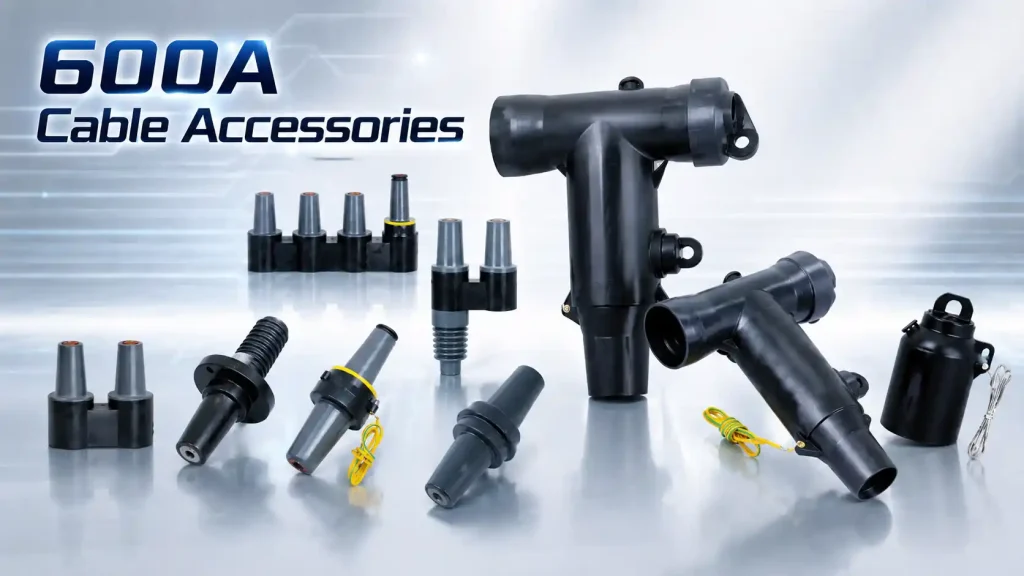
What Role Does a Separable Connector Play in Medium Voltage Systems?
A Connecteur séparable is a medium voltage cable accessory used to connect power cables to equipment such as switchgear, transformers, ring main units, compact substations, and cable branch boxes. Its key feature is the separable interface, which allows the connection to be assembled, disconnected, inspected, or replaced according to the correct operating and maintenance procedure.
Connexion câble-équipement
In a medium voltage system, cables must be connected to equipment while maintaining electrical insulation, mechanical strength, and stable current transmission. A Connecteur séparable provides an insulated path between the cable conductor and the equipment bushing. At the same time, it helps control electric field distribution around the connection area.
Un complet Connecteur séparable is usually not just one simple part. It may include an insulation body, conductive insert, stress control structure, shielding layer, grounding point, and equipment interface. These elements work together to reduce electrical stress and make the cable connection more stable.
Common application areas
A Connecteur séparable is often used in medium voltage equipment where compact layout and safe cable access are important. In ring main units, it supports cable-to-bushing connections inside limited cable compartments. In compact substations, it helps create safer enclosed cable connections. In cable branch boxes, it supports flexible cable distribution and easier future expansion.
It is also commonly used in distribution transformers, renewable energy power distribution networks, and industrial power systems. In these applications, the connector must withstand normal operating load, environmental changes, and maintenance activities over many years.
Why the separable structure matters
La valeur d'un Connecteur séparable comes from its removable and standardized connection structure. When equipment needs to be tested, replaced, maintained, or expanded, the cable connection can be handled more conveniently than many fixed termination solutions.
This does not mean the connector can be operated casually. Medium voltage work must always follow proper safety procedures. But with the correct connector type and correct installation method, the connection point becomes easier to inspect, easier to manage, and more predictable during service work.
How Does the Right Separable Connector Improve Cable Connection Safety?
Safety is one of the most important reasons for choosing the right Connecteur séparable. Medium voltage cable systems operate under higher electrical stress than low voltage systems, so insulation, shielding, grounding, and contact stability must be controlled carefully.
Insulation coordination
Un approprié Connecteur séparable must match the system voltage level. For example, 15kV and 24kV systems require connectors with corresponding insulation performance. If the insulation level is not suitable, the connection may face a higher risk of partial discharge, insulation aging, or electrical breakdown.
Insulation coordination is not only about the connector itself. It also involves the cable insulation, equipment bushing, installation distance, and testing requirements. When these parts are matched correctly, the cable connection becomes more reliable under long-term operation.
Electric field control
Electric field stress is concentrated around cable termination areas. If the stress is not controlled well, it may damage the insulation system over time. A properly designed Connecteur séparable helps distribute the electric field more evenly through its internal stress control structure.
This is especially important in compact equipment. In small cable compartments, there is less space for cable bending and termination work. A connector with reliable electric field control can reduce hidden risks caused by poor stress distribution.
Shielding and grounding
Many medium voltage Connecteur séparable designs use a screened or shielded structure. This allows the outer surface to be connected to ground, helping improve touch safety and reduce external electric field exposure. A good shielding design also supports more stable operation in enclosed medium voltage equipment.
Grounding must be installed correctly. Even a well-designed connector cannot perform safely if the grounding path is incomplete or poorly connected. For this reason, connector selection and installation quality should always be considered together.
Safer maintenance conditions
Quelques Connecteur séparable types, such as deadbreak connectors, are designed to be operated only when the circuit is de-energized. This supports safer maintenance by ensuring that the connection is handled under controlled conditions.
In medium voltage systems, reducing unnecessary exposure to live parts is essential. A properly selected Connecteur séparable keeps conductive parts enclosed and insulated, helping reduce risks during inspection and maintenance.
Que vérifier avant de choisir un connecteur séparable ?
A Connecteur séparable should not be selected only by appearance or general product category. The correct choice depends on electrical parameters, cable structure, equipment interface, site conditions, and maintenance needs. A connector that works well in one system may not be suitable for another system with different voltage, current, cable size, or installation space.
Voltage and current rating
The voltage rating must match the system voltage class. Common medium voltage applications may involve 15kV, 24kV, or other project-specific requirements. If the connector voltage rating is too low, the insulation margin may not be sufficient.
The current rating is equally important. A 600A application requires a connector designed to carry 600A safely under normal operating conditions. If the current rating is not suitable, overheating may occur at the connection point, especially under continuous load or high ambient temperature.
Compatibilité des câbles
Cable size and cable structure must be checked before choosing a Connecteur séparable. The connector should match the conductor size, insulation diameter, cable screen structure, and outer sheath preparation method. If the cable does not fit correctly, installation quality and electrical performance may both be affected.
Cable preparation is also critical. Uneven stripping, scratches on insulation, incorrect semi-conductive layer treatment, or contamination can all create weak points. A correct connector must be combined with proper installation tools and skilled cable preparation.
Interface d'équipement
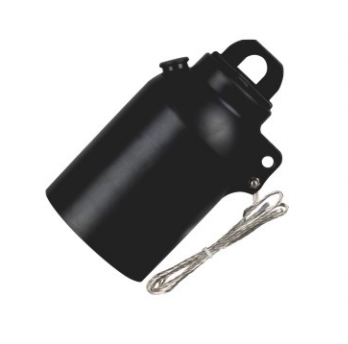
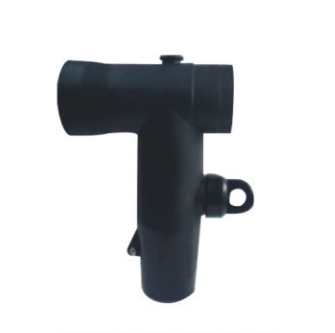
The connector must match the equipment bushing and installation direction. T-shaped connectors, front connectors, rear connectors, deadbreak connectors, busbars, bushings, and protective caps may be used in different layouts.
Before selection, it is important to confirm the bushing type, cabinet space, cable entry direction, and required connection sequence. In compact switchgear or RMU cable compartments, even a small mismatch can make installation difficult.
Operating environment
Medium voltage cable connections may be exposed to heat, humidity, dust, salt fog, outdoor conditions, and load changes. These factors can influence insulation aging, sealing performance, and mechanical stability.
For demanding environments, the Connecteur séparable should provide suitable sealing, insulation strength, material durability, and shielding performance. The goal is not only to pass installation testing, but also to maintain stable performance during years of operation.
Table 1: Key Factors Before Selecting a Separable Connector
| Facteur de sélection | Pourquoi c'est important | À vérifier |
| Tension nominale | Ensures insulation matches the system voltage | 15kV, 24kV, or project-specific voltage class |
| Note actuelle | Prevents overheating during continuous operation | 200A, 600A, or required load current |
| Type de connecteur | Determines operation and maintenance method | Deadbreak, T connector, front connector, rear connector |
| Compatibilité des câbles | Assure un bon ajustement mécanique et électrique | Conductor size, insulation diameter, cable screen type |
| Interface d'équipement | Avoids mismatch with switchgear or transformer bushings | Bushing type, mounting direction, cabinet space |
| Shielding design | Improves electric field control and touch safety | Screened or fully shielded structure |
| Grounding method | Supports safer fault control and stable shielding | Grounding point, grounding path, connection quality |
| Environnement | Influences aging resistance and sealing performance | Indoor, outdoor, humidity, dust, heat, salt fog |
How Can a Separable Connector Make Installation and Maintenance Easier?
Medium voltage equipment often has limited installation space. Cable compartments in ring main units, compact substations, transformers, and branch boxes can be difficult to access. A suitable Connecteur séparable helps make cable installation more orderly and maintenance more efficient.
Cleaner cable layout
A Connecteur séparable gives the cable connection a defined direction and interface. This helps reduce disorder inside cable compartments and makes the system easier to inspect. A clean cable layout also lowers the chance of cable bending stress, incorrect positioning, or confusion during maintenance.
For compact medium voltage equipment, space management is especially important. The right connector helps keep the cable route more organized while maintaining insulation and grounding requirements.
Easier testing and troubleshooting
Medium voltage cable systems may require testing during installation, commissioning, periodic maintenance, or fault investigation. A Connecteur séparable provides a more accessible and standardized connection point, which can make testing and troubleshooting easier.
When a fault occurs, separable connection design can help isolate the affected cable or equipment more efficiently. Instead of dismantling a complex fixed connection, technicians can work through a clearer disconnection and inspection process, provided all safety procedures are followed.
Better support for future expansion
Power distribution networks often change over time. New loads may be added, equipment may be replaced, and cable routes may need adjustment. A Connecteur séparable supports this flexibility by making the cable interface easier to manage.
This is useful in cable branch boxes, ring main units, renewable energy distribution systems, and industrial power networks. A well-planned connector system can make future expansion less complicated.
More predictable maintenance
Predictable maintenance depends on standardized components and clear records. When the Connecteur séparable type, cable size, installation date, test data, and equipment interface are properly recorded, future inspection becomes easier.
This helps maintenance teams identify connector types, replacement needs, and testing history more quickly. Over time, better maintenance records support safer and more reliable medium voltage system management.
Why Does Installation Quality Affect Separable Connector Performance?
Even a high-quality Connecteur séparable cannot deliver reliable performance if it is installed incorrectly. Medium voltage cable accessories require clean working conditions, accurate cable preparation, correct assembly sequence, and proper testing.
Cable preparation quality
Cable preparation is one of the most important steps. The conductor, insulation layer, semi-conductive layer, metallic screen, and outer sheath must be prepared according to the connector requirements. Scratches, uneven cutting, moisture, or dust can weaken the insulation system.
The cable surface should be clean, smooth, and correctly dimensioned before the connector is assembled. Poor cable preparation can cause electric field concentration, partial discharge, or unstable fitting.
Assembly sequence and torque
A Connecteur séparable normally has a specific installation sequence. Each part should be installed in the correct order. If parts are missed, reversed, or forced into place, the connector may not perform as intended.
Torque control is also important. Insufficient torque may cause loose contact, while excessive torque may damage the connector or equipment interface. Correct torque values should follow the installation instructions or project specification.
Interface cleanliness
The interface between the connector and the equipment bushing should be clean and free from dust, moisture, grease, or foreign particles. Contamination at the interface may affect insulation performance or contact quality.
Storage and handling should also be controlled. Connectors should be protected from unnecessary exposure before installation. This is particularly important on construction sites where dust, humidity, and mechanical damage are common.
Testing after installation
After installation, testing helps confirm whether the connection has been completed correctly. Depending on project requirements, tests may include insulation resistance testing, withstand voltage testing, continuity testing, or partial discharge assessment.
Testing should not be treated as a formality. It is an important step for confirming the safety and reliability of the Connecteur séparable before the system enters regular operation.
How Does the Right Separable Connector Improve Long-Term System Reliability?
The long-term value of a Connecteur séparable appears during years of operation. Medium voltage systems must withstand load changes, environmental stress, maintenance activities, and possible system expansion. A reliable connector helps reduce cable connection failures and supports stable power distribution.
Lower risk of connection failure
Many medium voltage failures are related to insulation defects, poor contact, overheating, moisture ingress, or incorrect installation. The right Connecteur séparable helps reduce these risks by providing a stable insulated interface.
When the connector matches the cable and equipment correctly, it can maintain electrical and mechanical performance under normal operating conditions. This helps reduce unexpected downtime and improves system availability.
Stronger maintenance planning
A Connecteur séparable makes inspection, testing, and replacement more manageable. With a standardized interface, maintenance teams can work with clearer procedures and better component identification.
This supports planned maintenance instead of emergency repair. For power distribution systems where downtime affects production, public service, or facility operation, this predictability is valuable.
Better adaptability for changing systems
Medium voltage networks are not always fixed. Load demand may increase, equipment may be upgraded, or additional cable branches may be required. A suitable Séparable Connecteur gives the system more flexibility when changes are needed.
This adaptability is especially useful in substations, industrial facilities, renewable energy projects, and compact power distribution systems. Instead of treating the connector as a minor accessory, it should be viewed as part of the overall medium voltage connection strategy.
Coordinated Medium Voltage Cable Accessories
A Connecteur séparable often works together with other Accessoires pour câbles moyenne tension. Bushings, busbars, protective caps, insulation plugs, surge arresters, and screened connectors may all be part of the same connection system.
When these accessories are selected as a coordinated solution, the connection point becomes safer, cleaner, and easier to maintain. This improves the overall reliability of the medium voltage system.
Table 2: Typical Applications of Separable Connector Solutions
| Domaine d'application | Typical Equipment | Main Connection Need | Key Benefit |
| Cellule de coupure | RMU cable compartment | Cable-to-bushing connection | Compact layout and easier maintenance |
| Poste de transformation compact | Transformer and switchgear side | Medium voltage cable input or output | Safer enclosed cable connection |
| Boîte de dérivation de câble | Multi-way distribution point | Branch connection and future expansion | Flexible network arrangement |
| Distribution transformer | Medium voltage input side | Cable connection to transformer bushing | Stable insulated interface |
| Renewable energy system | PV or wind power distribution network | Medium voltage collection and transfer | Reliable connection under changing load |
| Système d'alimentation industrielle | Switchgear and distribution cabinets | Equipment-to-cable connection | Improved operation safety and service access |
Conclusion
Medium voltage systems need the right Connecteur séparable because cable connection quality has a direct impact on safety, insulation reliability, equipment protection, maintenance efficiency, and long-term system stability. A suitable connector helps control electric field stress, improve shielding and grounding, reduce installation risks, and make future inspection or replacement more manageable.
When selecting a Connecteur séparable, key factors include voltage rating, current rating, cable compatibility, equipment interface, connector type, shielding structure, grounding method, operating environment, and installation quality. These factors should be considered together, because the performance of a medium voltage cable connection depends on the whole system rather than one single component.
For projects that require Medium Voltage Cable Accessories and 600A Separable Connector solutions, YIEOU provides related options including busbars, deadbreak connectors, bushings, and insulated protective caps. These products can be selected according to voltage class, current capacity, cable structure, equipment interface, and installation requirements.