
Introdução
Cable connections are small parts of a medium voltage power system, but their condition can affect the safety, stability, and service life of the whole network. A weak connection point may lead to overheating, insulation aging, moisture ingress, poor contact, partial discharge, or unexpected shutdown. In systems where transformers, ring main units, switchgear, cable branch boxes, and compact substations are used, the cable interface must be both electrically reliable and convenient for future maintenance.
A Conector Separador helps create a safer and more manageable connection between medium voltage cables and electrical equipment. It provides an insulated and structured interface, allowing the cable connection to be installed, checked, protected, and maintained more effectively. Instead of leaving the cable termination as a difficult fixed point, a Conector Separador makes the connection easier to organize within a complete medium voltage cable system.
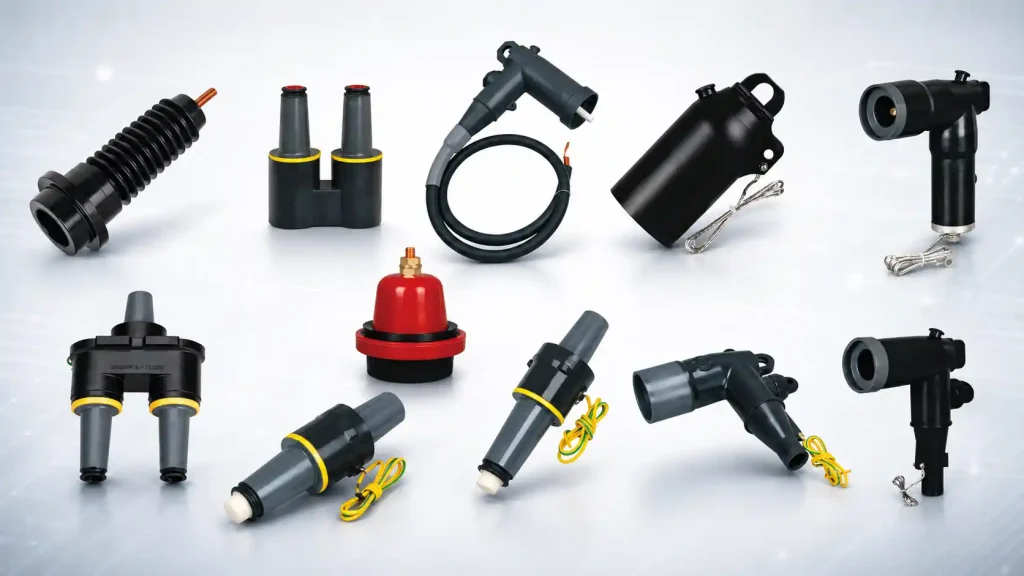
In practical projects, a Conector Separador is usually used together with other Acessórios para Cabos de Média Tensão, such as bushing inserts, casing seats, loadbreak junctions, grounding elbows, insulation caps, elbow surge arresters, and related interface components. These accessories help support insulation, grounding, surge protection, equipment matching, and system expansion.
Keeping cable connections in good condition is not only about choosing one product. It requires correct voltage matching, current rating, cable preparation, interface compatibility, installation quality, and long-term maintenance planning. This article explains how a Conector Separador supports better cable connection condition in medium voltage power distribution systems.
What Makes a Separable Connector Important for Medium Voltage Cable Connections?
A Conector Separador is important because medium voltage cable connections must handle more than simple current transmission. They must control electrical stress, protect insulation surfaces, maintain firm contact, and remain stable under changing operating conditions. In many power distribution networks, the cable connection point is one of the most sensitive areas because it combines electrical, mechanical, and environmental challenges in a limited space.
Creating a controlled connection interface
In medium voltage systems, cables are often connected to equipment bushings, ring main units, transformers, or cable branch boxes. If the interface is poorly matched, the connection may suffer from unstable contact pressure, uneven electrical stress, or installation difficulty. A Conector Separador helps create a controlled connection interface between the cable and the equipment.
This controlled interface is especially useful in compact substations and enclosed distribution equipment. These spaces require connections that are neat, insulated, and serviceable. A Conector Separador helps reduce disorder around the cable termination area and makes the connection easier to inspect during maintenance.
Supporting insulation protection
Insulation condition is one of the most important factors in medium voltage cable reliability. Dust, moisture, surface contamination, mechanical damage, or incorrect installation can gradually reduce insulation performance. A Conector Separador helps protect the connection area with an insulated structure and a suitable interface design.
When matched with proper Acessórios para Cabos de Média Tensão, the connection can also be protected by insulation caps, grounding components, surge protection devices, and casing parts. These accessories help reduce exposed areas and support a cleaner cable connection environment.
Making maintenance more practical
Medium voltage cable systems often need inspection, testing, equipment replacement, or future expansion. A fixed cable termination can make these tasks more difficult, especially in compact cabinets or underground cable networks. A Conector Separador provides a more serviceable structure, allowing the connection to be checked and handled more conveniently under proper safety procedures.
This maintenance advantage is important for long-term operation. When cable routes change, loads increase, or equipment is upgraded, a Conector Separador can help reduce the difficulty of cable-side work.
Table 1: How a Separable Connector Helps Maintain Cable Connection Condition
| Cable Connection Concern | Common Risk | How the Separable Connector Helps |
| Insulation condition | Moisture, dust, and surface contamination may reduce insulation reliability | Helps protect the connection area with an insulated interface |
| Equipment matching | Poor interface matching may cause unstable connection quality | Supports a structured cable-to-equipment connection |
| Maintenance access | Fixed cable terminations can be difficult to check or replace | Makes inspection, testing, and replacement more practical |
| Safety management | Exposed conductive parts may increase operation risk | Helps reduce exposed connection areas |
| Layout do sistema | Compact equipment may leave limited cable space | Supports cleaner and more organized cable arrangement |
| Future expansion | Network changes may require cable-side modification | Works with Medium Voltage Cable Accessories for flexible connection planning |
Como um Conector Separador Pode Ajudar a Prevenir Problemas de Conexão de Cabos?
A Conector Separador helps prevent cable connection problems by improving interface consistency, insulation protection, maintenance access, and accessory coordination. Many cable faults do not appear immediately after installation. They often develop slowly due to thermal stress, poor contact, moisture, contamination, or incorrect accessory matching.
Helping avoid interface mismatch
Interface mismatch is a common cause of cable connection problems. If the cable connector does not match the equipment bushing, casing seat, or insert, the connection may be difficult to install correctly. Even if the parts can be assembled physically, the electrical and mechanical performance may not be reliable.
A Conector Separador should be selected according to voltage level, current rating, cable specification, and equipment interface. For example, 15kV and 24kV systems require different insulation coordination. A 200A connection system also needs compatible current-carrying components. When the connector, bushing insert, casing seat, and related accessories are selected together, the connection is more likely to remain stable during operation.
Reducing overheating risk
Overheating at a cable connection may come from poor contact pressure, incorrect conductor preparation, loose assembly, unsuitable current rating, or long-term load stress. Once heat builds up at the connection point, it may accelerate insulation aging and increase the risk of failure.
A Conector Separador can help reduce this risk by providing a designed connection structure. However, correct installation is still essential. Cable stripping, conductor connection, surface cleaning, torque control, and accessory assembly must be handled carefully. When the connector is properly selected and installed, the cable connection can maintain better contact quality and thermal stability.
Protecting against moisture and contamination
Cable connections may be installed in outdoor cabinets, compact substations, dusty environments, humid areas, or underground cable networks. Moisture and contamination can affect insulation surfaces and gradually weaken the connection.
A Conector Separador helps protect the cable interface by enclosing and insulating the connection point. Related Acessórios para Cabos de Média Tensão can further improve protection. Insulation caps help cover unused interfaces. Grounding elbows support safer grounding operations. Elbow surge arresters help protect against overvoltage events. These parts work together to keep the cable connection in better condition.
Making small problems easier to find
When a cable connection is difficult to access, small problems may remain hidden until they cause serious failure. A Conector Separador makes the connection point easier to manage during inspection and maintenance. This helps maintenance teams check the connection condition more efficiently and respond earlier when signs of aging, overheating, or interface problems appear.
For power distribution systems that need reliable long-term operation, easier maintenance access can reduce downtime and improve system management.
O que deve ser verificado antes de escolher um conector separável?
Escolhendo um Conector Separador should not depend only on product appearance or general category. The correct connector must match the actual electrical system, equipment interface, cable structure, and operating environment. A good selection process helps the cable connection stay in good condition throughout its service life.
Nível de tensão
The rated voltage is one of the first points to check. Medium voltage cable systems may involve 15kV, 24kV, or other voltage classes. The Conector Separador and all matching accessories must meet the insulation requirement of the system. If the voltage class is not suitable, the connection may face insulation stress even when the physical size seems correct.
Voltage matching also affects the selection of bushing inserts, casing seats, insulation caps, and surge protection accessories. A complete connection system should be designed around the same voltage requirement.
Classificação atual
The current rating must match the actual load condition. Many American-style cable accessory systems use 200A components for specific medium voltage applications. The Conector Separador should be selected according to rated current, expected operating load, and future expansion plans.
If the current rating is too low, the connection may experience unnecessary thermal stress. If related accessories are not coordinated, the system may not perform as intended. Therefore, the connector, junction, insert, casing seat, and other accessories should be reviewed together.
Especificação do cabo
The cable size, conductor material, insulation type, and screen structure all affect connector selection. A Conector Separador must match the cable so that the termination can be prepared correctly. Poor cable preparation or unsuitable accessory matching may reduce insulation quality and mechanical stability.
Cable condition should also be considered during maintenance or replacement. Older cables may require more careful inspection before a new connector system is installed.
Interface do equipamento
The connector must match the equipment interface. Transformers, ring main units, switchgear, and cable branch boxes may use different bushing or casing structures. A Conector Separador must fit the interface correctly to ensure stable mechanical and electrical performance.
Bushing inserts, casing seats, single-pass casing joints, and double-pass casing connectors all have different roles. Choosing the wrong interface component can cause installation problems and reduce long-term reliability.
Função operacional
Different cable connection points may require different functions. Some systems need loadbreak operation. Some need grounding. Some need surge protection. Some need insulation protection for unused interfaces. A Conector Separador should be selected according to the real function required at that point in the system.
This is why Acessórios para Cabos de Média Tensão should not be treated as isolated parts. They should be selected as a coordinated cable connection system.
Table 2: Key Selection Factors for a Separable Connector System
| Fator de Seleção | What to Confirm | Por que isso importa |
| Tensão nominal | 15kV, 24kV ou nível de tensão específico do projeto | Helps maintain proper insulation coordination |
| Corrente nominal | 200A or other required current rating | Supports stable current carrying under normal operation |
| Especificação do cabo | Cable size, insulation type, conductor material, and screen structure | Helps ensure correct cable preparation and termination |
| Interface do equipamento | Transformer bushing, RMU interface, switchgear interface, or cable branch box interface | Prevents mismatch during installation |
| Required function | Loadbreak, grounding, insulation, surge protection, or branching | Ensures the connection meets real operation needs |
| Ambiente de instalação | Indoor cabinet, outdoor enclosure, compact substation, or cable network | Affects insulation, sealing, and maintenance planning |
| Accessory coordination | Insert, casing seat, insulation cap, grounding elbow, arrester, and junction | Helps build a complete and reliable connection system |
Como os Acessórios de Cabos de Média Tensão Funcionam com um Conector Separador?
A Conector Separador usually works as part of a complete medium voltage cable accessory system. To keep cable connections in good condition, the connector must be coordinated with the right accessories. Each accessory has a specific role in insulation, grounding, interface matching, surge protection, or network arrangement.
Inserções de bucha e assentos de caixa
Bushing inserts and casing seats help prepare the equipment-side interface. Without the correct interface component, the cable connector may not fit properly or may not achieve reliable electrical contact. A Conector Separador depends on accurate interface matching, so bushing inserts and casing seats are important parts of the connection system.
For example, a bushing insert may help connect a loadbreak elbow connector to the equipment interface. A casing seat may provide a suitable connection point for cable accessory installation. When these parts are properly matched, the connection becomes more stable and easier to maintain.
Loadbreak elbow connectors and junctions
Loadbreak elbow connectors are used when the system requires a compact, insulated, and serviceable cable connection. In some layouts, loadbreak junctions can support branching and network arrangement. A Conector Separador used in this type of system helps make the connection easier to install, isolate, and manage.
This is useful in ring main units, cable branch boxes, and compact distribution systems where cable routes may need to be arranged in a limited space. The connection system can become cleaner and more flexible when the correct junctions and elbow connectors are selected.
Grounding elbows and insulation caps
Grounding and interface protection are important for long-term cable connection condition. A grounding elbow can support safer grounding during maintenance and testing. An insulation cap can protect unused interfaces from contamination, accidental contact, and environmental exposure.
Quando um Conector Separador is used in a system with reserved interfaces or future expansion points, insulation caps become especially useful. They help keep unused connection points protected until the system is expanded or modified.
Para-raios de cotovelo
Surge protection is another important part of medium voltage cable system reliability. Lightning, switching operation, or transient overvoltage may stress cable insulation and connected equipment. An elbow surge arrester can help protect the connection system from overvoltage damage.
When an elbow surge arrester is coordinated with the Conector Separador, the cable connection gains better protection against surge-related stress. This can help extend the service life of the cable system and reduce the risk of insulation failure.
How Can a Separable Connector Support Long-Term Maintenance and Reliable Operation?
A Conector Separador supports long-term reliability by making cable connections easier to manage over time. Medium voltage power systems are not always fixed after installation. Loads may increase, equipment may be upgraded, cable routes may change, and accessories may need replacement. A connection system that is easier to inspect and modify can reduce future maintenance pressure.
Inspeção e substituição mais fáceis
During operation, cable connections may need inspection after fault alarms, maintenance schedules, or equipment changes. A Conector Separador allows the connection point to be managed more conveniently under proper safety procedures. This can make inspection, testing, replacement, and troubleshooting more efficient.
For systems with fixed cable terminations, maintenance may require more time and more complex site work. A separable design gives the connection system more flexibility, which is valuable for distribution networks that require stable long-term service.
Better support for compact installations
Many modern medium voltage systems use compact equipment rooms, outdoor enclosures, compact substations, and enclosed switchgear. These spaces do not allow messy or oversized cable termination arrangements. A Conector Separador helps create a cleaner cable layout and reduces exposed connection areas.
This advantage is especially useful where equipment space is limited but the system still requires safe operation, easy access, and future maintenance capacity.
More flexibility for future expansion
Power distribution networks often change after installation. New loads may be added, reserved cable routes may be activated, and equipment may be replaced. A Conector Separador can support this flexibility because it works with accessory systems that allow interface protection, branching, grounding, and equipment-side connection changes.
For example, unused interfaces can be protected with insulation caps. Branching arrangements may use loadbreak junctions. Equipment-side interfaces may use suitable inserts or casing components. This makes the whole connection system easier to adapt when the network changes.
Matching the accessory system to real project needs
In American-style medium voltage cable accessory systems, the conector should be selected as part of a complete connection arrangement rather than as a single isolated part. A cable-to-equipment connection may require a loadbreak elbow connector, while the equipment side may also need a suitable bushing insert, casing seat, or casing joint to create a reliable interface. If the project involves reserved interfaces, future expansion, grounding operation, or overvoltage protection, insulation caps, grounding elbows, surge arresters, and loadbreak junctions may also be considered.
The key point is compatibility. Each component should match the rated voltage, rated current, cable specification, equipment interface, installation space, and maintenance method. For example, 15kV and 24kV systems have different insulation requirements, and 200A connection layouts need accessories designed for the same current level. When these details are coordinated correctly, the connection system is not only easier to install, but also easier to inspect, protect, and maintain during long-term operation.
Instead of choosing accessories only by model name, the better approach is to understand the function of each connection point. One position may need cable connection, another may need insulation protection, another may need grounding, and another may need surge protection. This makes the whole Separable Connector system more practical and helps keep medium voltage cable connections in good condition.
Conclusão
Keeping medium voltage cable connections in good condition requires correct product selection, proper installation, suitable insulation protection, reliable grounding, surge protection, and long-term maintenance planning. A Conector Separador helps support these needs by creating a protected, serviceable, and flexible connection point between medium voltage cables and electrical equipment.
When used with suitable Acessórios para Cabos de Média Tensão, a Conector Separador can help reduce problems caused by poor interface matching, exposed conductive areas, moisture, contamination, overheating, and difficult maintenance. It also supports future network expansion and makes cable connection management more practical for transformers, ring main units, switchgear, cable branch boxes, compact substations, and other medium voltage equipment.
YIEOU provides related American-style cable accessory options for medium voltage connection systems, including loadbreak elbow connectors, grounding elbows, insulation caps, elbow surge arresters, loadbreak junctions, bushing inserts, casing seats, single-pass casing joints, double-pass casing connectors, and lengthening casings for different project requirements.