
Introduction
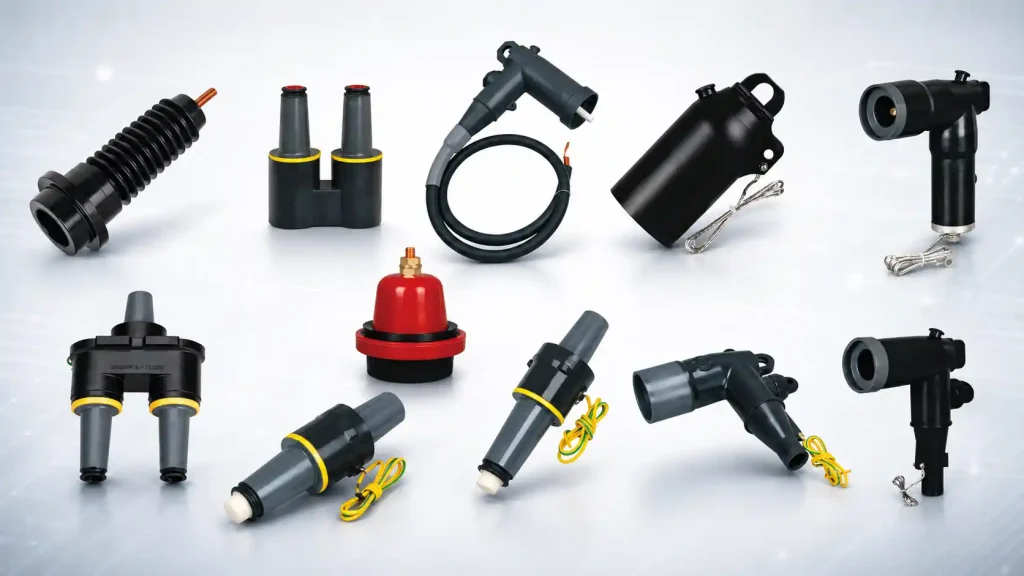
A Separable Connector is a key interface component in medium voltage power distribution systems. It is widely used in American cable accessories systems for 15kV and 24kV networks, where underground cables need to connect safely with transformers, switchgear, ring main units, compact substations, and cable branching equipment.
Unlike fixed cable terminations, a Separable Connector provides a fully insulated, fully shielded, and separable connection. This structure allows cable circuits to be connected, disconnected, grounded, tested, or maintained more efficiently under proper operating conditions.
In real engineering applications, a Separable Connector is not used alone. It works with a complete Medium Voltage Cable Accessories system, including loadbreak elbow connectors, grounding elbows, insulation caps, bushing inserts, casing seats, junction accessories, and surge arresters. If these components do not match, the system may face overheating, partial discharge, poor sealing, grounding failure, or interface mismatch.
For 2026 procurement, Separable Connector selection should not depend only on catalog models or unit price. A reliable decision should consider voltage class, current rating, cable compatibility, interface geometry, environmental resistance, installation space, maintenance needs, and supplier capability.
1. What Role Does a Separable Connector Play in Medium Voltage Cable Accessories?
A Separable Connector acts as a modular interface between medium voltage cables and electrical equipment. Its main function is to provide a safe, insulated, and serviceable connection point.
In American cable accessories systems, it is commonly used for:
- Transformer cable connection
- RMU and switchgear connection
- Underground cable branching
- Loadbreak operation under rated conditions
- Maintenance isolation
- Safety grounding
- Protection of unused interfaces
- Surge protection coordination
For example, a typical 15kV system may use a JY ZT-15/200 loadbreak elbow connector together with a JY DTT-15/200 bushing insert, JY TGZ-200 casing seat, JY JDZT-15/200 grounding elbow, and JY JYM insulation cap. These parts form one coordinated system.
This is why the Separable Connector should always be evaluated as part of a complete Medium Voltage Cable Accessories structure, not as a single independent product.
2. How Should Voltage and Current Ratings Be Selected?
Voltage and current ratings define the basic operating boundary of a Separable Connector. Before selecting a model, the system voltage, continuous current, insulation level, and switching requirement should be confirmed.
Common system levels include:
- 15kV distribution networks
- 24kV medium voltage systems
- 200A loadbreak interface systems
- 17/50kV surge protection applications
Typical model matching may include:
- JY ZT-15/200 for standard 15kV loadbreak systems
- JY ZT-25/200A for higher voltage interface requirements
- JY TGZ-200 for 15kV / 24kV casing seat support
- BLQ-17/50 for overvoltage protection coordination
Incorrect selection can cause insulation breakdown, thermal overload, arc failure, or long-term dielectric aging. A Separable Connector should therefore be checked not only by voltage rating, but also by cable size, bushing interface, grounding structure, and installation environment.
Table 1. Electrical Coordination Reference for Separable Connector Systems
| System Level | Connector Type | Current Rating | Typical Application |
| 15kV | Loadbreak Separable Connector | 200A | Distribution systems |
| 24kV | High-voltage interface connector | 200A | Industrial and utility networks |
| 17/50kV | Surge arrester system | — | Overvoltage protection |
| 15kV / 24kV | Casing seat and bushing interface | 200A | Transformer, RMU, cable systems |
3. What Are the 10 Essential Selection Factors?
A structured selection process helps reduce project risk. The following 10 factors are especially important for American cable accessories procurement.
1. Cable Compatibility
The Separable Connector must match conductor size, insulation diameter, insulation thickness, cable shielding structure, and outer jacket condition. Poor cable matching may create air gaps, uneven electric field distribution, or installation stress.
2. Interface Geometry
The connector should match the bushing insert, casing seat, and equipment interface. For YIEOU systems, this may involve JY DTT bushing inserts, JY TGZ casing seats, and related 200A interface accessories.
3. Loadbreak Capability
A loadbreak Separable Connector should support rated energized connection and disconnection under proper conditions. This requires reliable arc control, stable conductive contact, and correct engagement depth.
4. Grounding Integration
Safe maintenance depends on proper grounding. A grounding elbow such as JY JDZT-15/200 helps provide a controlled grounding path before inspection or maintenance work.
5. Insulation Coordination
The connector should withstand power frequency voltage, impulse voltage, and partial discharge stress. Good insulation coordination helps prevent long-term breakdown.
6. Surge Protection Matching
Medium voltage networks may face lightning impulse or switching overvoltage. Matching the connector system with a surge arrester such as BLQ-17/50 can improve protection for cables and equipment.
7. Environmental Resistance
Outdoor, underground, or humid installations require strong sealing performance. The connector should resist moisture, UV exposure, dust, pollution, and temperature cycling.
8. Installation Space
RMU cabinets, compact substations, and transformer compartments may have limited space. The connector structure should match cable bending radius, installation angle, and maintenance clearance.
9. Maintenance Accessibility
A good connector system should make grounding, testing, inspection, and replacement easier. This helps reduce downtime and simplify future operation.
10. System Compatibility
The Separable Connector must coordinate with the full Medium Voltage Cable Accessories ecosystem, including elbows, bushings, caps, casing seats, junction accessories, and arresters.
4. What Problems Come From Incorrect Selection?
Incorrect selection often creates system-level risks. The connector may look suitable from one parameter, but fail under actual operating conditions.
Common failure modes include:
- Partial discharge at the interface
- Overheating under continuous load
- Moisture ingress in outdoor environments
- Sealing failure after temperature cycling
- Poor contact with bushing insert
- Grounding failure during maintenance
- Premature insulation aging
- Difficult installation or replacement
The root cause is usually incomplete matching. For example, a connector may have the correct voltage class but the wrong interface geometry. A cable may meet the system voltage but not match the insulation diameter range. A surge arrester may be needed, but not included in the system configuration.
This confirms one important principle: Separable Connector selection should be system-driven, not product-driven.
Table 2. YIEOU Separable Connector Model and Application Mapping
| Model | Type | Function | System Role |
| JY ZT-15/200 | Loadbreak elbow connector | Live switching | Distribution system |
| JY ZT-25/200A | High-voltage elbow connector | Extended voltage operation | Industrial grid |
| JY JDZT-15/200 | Grounding elbow | Safety grounding | Maintenance |
| JY JYM | Insulation cap | Interface protection | Idle ports |
| JY MP-15kV | Junction system | Cable branching | Network expansion |
| JY DTT-24/200 | Bushing insert | Equipment interface | Transformer connection |
| JY TGZ-200 | Casing seat | Structural interface | RMU and equipment systems |
| BLQ-17/50 | Elbow surge arrester | Overvoltage protection | System protection |
5. Where Is a Separable Connector Commonly Used?
A Separable Connector is widely used in medium voltage cable systems that require insulated, compact, and maintainable connections.
Typical applications include:
- Transformer distribution systems
- Ring main unit networks
- Underground cable systems
- Industrial power supply systems
- Renewable energy substations
- Compact substations
- Cable branching systems
- Urban distribution networks
In transformer systems, the connector links the cable to the transformer bushing. In RMU networks, it supports compact installation and modular connection. In underground systems, it allows future expansion, maintenance, or circuit segmentation. In renewable energy substations, sealing performance and surge protection become especially important because outdoor environments and long cable routes increase operating stress.
Different scenarios require different selection priorities. A compact RMU may need a space-saving structure. A transformer station may focus more on bushing compatibility. An outdoor substation may require stronger moisture resistance and surge protection.
6. How Should Installation Quality Be Controlled?
Even a correctly selected Separable Connector can fail if installation is poor. Installation quality directly affects insulation performance, sealing reliability, and service life.
A typical installation process includes:
Cable Preparation
The cable insulation, semiconductive layer, and conductor should be prepared according to specified dimensions. The surface must be clean, smooth, and free from cuts or burrs.
Interface Alignment
The connector should align correctly with the bushing insert or casing seat. Forced installation may damage the interface or create uneven stress.
Connector Engagement
For loadbreak systems, the connector must be fully engaged to ensure stable conductive contact and proper arc control.
Grounding Verification
Before maintenance, the grounding elbow and grounding path should be checked carefully.
Sealing Inspection
The insulation cap, connector body, and interface area should be inspected to prevent moisture ingress.
Final System Check
After installation, the system should be checked for mechanical stability, grounding condition, accessory completeness, and correct interface position.
Clean cable preparation, correct tools, trained installation, and matched accessories are all necessary for reliable performance.
7. How Should a Separable Connector Supplier or Factory Be Evaluated?
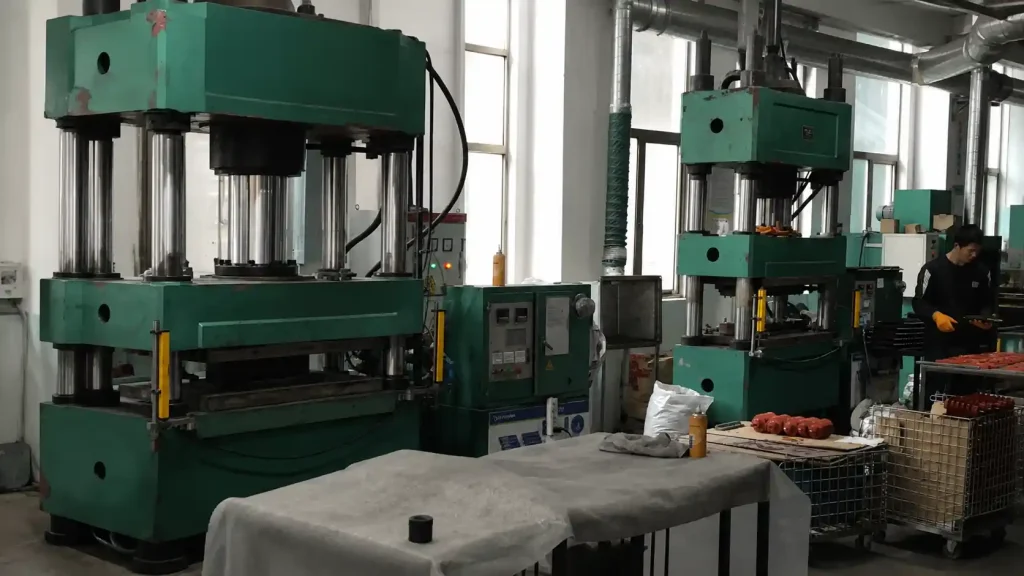
A qualified Separable Connector supplier should provide more than individual products. Since American cable accessories work as a coordinated system, the supplier should support complete matching and technical communication.
Important evaluation points include:
- Complete Medium Voltage Cable Accessories product range
- Stable production capability
- Dielectric testing capability
- Loadbreak performance verification
- Interface compatibility control
- Batch consistency
- Support for 15kV and 24kV applications
- Technical support for system selection
- Matching elbows, bushings, caps, casing seats, and arresters
A strong factory should understand how each part works in the complete system. The loadbreak elbow must match the bushing insert. The grounding elbow must match the maintenance procedure. The insulation cap must protect unused ports. The surge arrester must match the overvoltage protection requirement.
YIEOU’s American cable accessories series covers loadbreak elbow connectors, grounding elbows, insulation caps, bushing inserts, casing seats, junction accessories, and surge arresters. This helps improve system consistency and reduces the risk of mixing incompatible components from different sources.
8. Why Is Lifecycle Cost Important?
Initial purchase cost is only one part of Separable Connector procurement. Long-term cost is often more important in medium voltage systems.
Lifecycle cost is affected by:
- Installation complexity
- Labor time
- Maintenance frequency
- Downtime risk
- Replacement difficulty
- Spare parts standardization
- Failure probability
- Compatibility with existing equipmen
- Long-term supply stability
A low-cost connector may increase total cost if it causes difficult installation, frequent maintenance, poor sealing, or accessory mismatch. A well-designed system can reduce downtime, simplify spare parts management, and improve maintenance efficiency.
For repeated projects, standardizing the same connector system, bushing interface, grounding method, and insulation cap structure can make installation and maintenance more predictable.
FAQ
What is a Separable Connector used for?
A Separable Connector is used to connect and disconnect medium voltage cables from transformers, switchgear, RMU systems, and other equipment through a fully insulated and shielded interface.
What systems use Separable Connectors?
Separable Connectors are commonly used in 15kV and 24kV American cable accessories systems, including distribution networks, underground cable systems, transformer stations, industrial systems, and renewable energy substations.
What components are included in a Separable Connector system?
A complete system may include loadbreak elbow connectors, grounding elbows, insulation caps, bushing inserts, casing seats, junction accessories, and surge arresters.
Is voltage rating the only selection standard?
No. Voltage rating is important, but selection should also consider current rating, cable size, insulation diameter, bushing interface, grounding structure, installation space, environmental condition, and accessory coordination.
How can the right Separable Connector reduce failure risk?
The right connector improves interface matching, insulation coordination, grounding safety, sealing performance, and system compatibility. These factors help reduce partial discharge, overheating, moisture ingress, and maintenance problems.
Conclusion
A Separable Connector should be selected as part of a complete Medium Voltage Cable Accessories system, not as a single isolated product. Proper matching of voltage rating, cable size, interface structure, grounding method, sealing performance, and installation conditions helps improve long-term reliability.
YIEOU provides coordinated American cable accessories for 15kV and 24kV systems, including loadbreak elbow connectors, grounding elbows, insulation caps, bushing inserts, casing seats, junction accessories, and surge arresters.