
A 200A separable connector system may include more connection points than the project needs during its initial operating stage. A loadbreak junction may have an unused way, a pad-mounted transformer may include a spare bushing position, or a cable branch box may reserve an interface for future expansion.
These spare ports cannot be left exposed. They remain part of the medium-voltage insulation system even when no cable is connected. Dust, moisture, physical damage, incorrect accessories or incomplete grounding can weaken the interface and create unnecessary operating risks.
The correct protection method depends on the intended condition of the port. An energized spare interface normally requires a compatible insulated protective cap. A de-energized interface prepared for maintenance may require a grounding elbow. A port assigned to overvoltage protection may use an elbow surge arrester. These accessories may fit within the same 200A connection family, but they do not perform the same function.
YIEOU supplies American-style 200A cable accessories including loadbreak junctions, grounding elbows, insulated protective caps, casing components and elbow surge arresters. Matching these products as one connection system helps prevent a spare port from becoming the weakest point in the installation.
An Energized Spare Port Needs an Insulated Protective Cap
The normal solution for an energized but unused 200A interface is a correctly rated insulated protective cap.
A spare interface is not electrically inactive simply because no cable is connected. It may still be connected to an energized junction, transformer bushing, feed-through component or other medium-voltage device. The open interface therefore requires the same attention to insulation, sealing and shielding as an active cable connection.
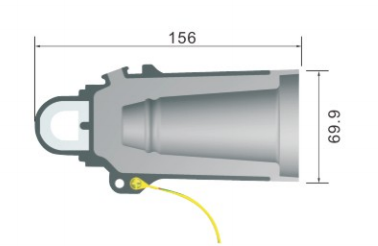
YIEOU’s JY JYM 15kV 200A American-type insulation cap is designed to electrically insulate and mechanically seal a loadbreak bushing interface. When properly mated and grounded through its drain wire, it provides a fully shielded, submersible insulating cover. It can be used for temporary or permanent protection on compatible 200A bushings, junctions and insulated standoff bushings.
The cap must match the complete interface.
The words “15kV” and “200A” are not the only information that matters. The protective cap must also match the physical interface family, mating dimensions and equipment-side component.
A cap that appears to fit may still fail to seat completely. Incomplete engagement can create a gap, reduce sealing pressure or disturb the intended electric-field control. For this reason, the equipment bushing, junction or standoff interface should be identified before the cap is ordered.
Where equipment drawings are available, the interface information should be checked against the proposed accessory. A product photograph alone is not enough to confirm compatibility.
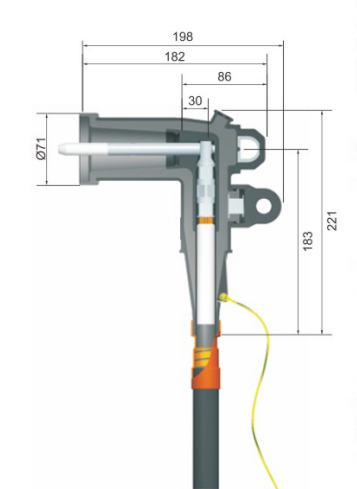
The drain wire must be connected correctly.
A screened insulated cap normally includes an external conductive layer and a grounding lead or drain wire. This grounding arrangement helps maintain the intended external surface condition after the cap is installed.
The grounding lead should not be treated as an optional packaging detail. It must be connected according to the product instructions and the project grounding design. A loose, damaged or unconnected drain wire can prevent the cap from providing its intended screened configuration.
The grounding point should also remain accessible for inspection. Hiding the lead behind unsupported cables or sharp metal edges makes future checking more difficult and may expose it to mechanical damage.
A Shipping Cap Cannot Protect an Energized Interface
Temporary transport covers and dust caps are not substitutes for an energized-service insulation cap.
Equipment bushings, junctions and cable accessories may be supplied with protective covers to keep the interface clean during transportation, storage or assembly. These covers are useful before installation, but their presence does not prove that they have the insulation, shielding or sealing performance required for an energized medium-voltage connection.
Transport protection ends before energization.
A shipping cap is generally intended to prevent dust, scratches or packaging debris from reaching the interface. Its role ends once the equipment is prepared for service.
Before energization, every unused port should be reviewed. The installer should determine whether the existing cover is an operational insulated protective cap or only a temporary shipping component. When the identification is unclear, the interface should not be energized until the accessory is confirmed.
This is especially important during equipment replacement. A pad-mounted transformer or sectionalizing cabinet may arrive with several covered ports, but the covers may not all be intended for energized operation.
A loose cover does not provide a sealed interface.
Even a correctly rated cap cannot protect the system if it has not reached its final seated position. The interface should be clean, lubricated where specified and assembled according to the installation instructions.
Forcing a cap onto a contaminated or damaged bushing can trap particles between the mating surfaces. This may affect sealing and create local electrical stress. The cap should never be hammered, modified or pushed into place with unsuitable tools.
The final assembly should be checked for correct engagement, secure grounding and adequate mechanical clearance.
A Grounding Elbow Does Not Replace an Insulation Cap
A grounding elbow serves a maintenance and safety function. It is not a general-purpose cover for an energized spare port.
YIEOU’s JY JDZT-15/200 15kV 200A grounding elbow is intended to provide a visible grounding point in compatible underground and medium-voltage cable systems. It can connect with a suitable bushing insert or related 200A interface after the circuit has been isolated and handled under an approved grounding procedure.
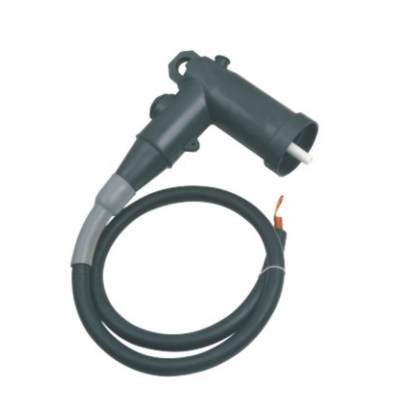
The circuit must be de-energized first.
A grounding elbow should only be installed after the circuit has been isolated, tested and confirmed de-energized. Its presence does not remove the need for voltage verification, switching control, lockout procedures or qualified personnel.
Installing a grounding elbow on an energized interface would misuse the accessory and create a serious hazard. The fact that it belongs to the same 200A interface family does not make it interchangeable with an insulated cap.
For a spare port that remains energized during normal operation, the correct accessory is usually an insulated protective cap—not a grounding elbow.
Grounding elbows support planned maintenance.
Grounding elbows are useful when a cable circuit must remain visibly grounded during inspection, repair or equipment replacement. They can help establish a clearly defined maintenance condition at a compatible separable interface.
For example, a loadbreak junction may be used to sectionalize a cable run and isolate a faulted section. Once the circuit has been switched, tested and confirmed de-energized, a grounding elbow may form part of the approved work arrangement. YIEOU’s 15kV 200A loadbreak junction is intended for sectionalizing, loops, taps, splices and equipment changeouts in installations such as pad-mounted apparatus and underground vaults.
After maintenance is complete, the grounding elbow should be removed according to the approved procedure. If the interface returns to energized spare status, it must then receive the correct insulated protective cap.
A Surge Arrester Uses the Port for Protection
An elbow surge arrester can be installed on a compatible 200A interface when the port has been intentionally assigned to overvoltage protection.
It should not be selected merely because a spare port is available. The decision must come from the network protection design.
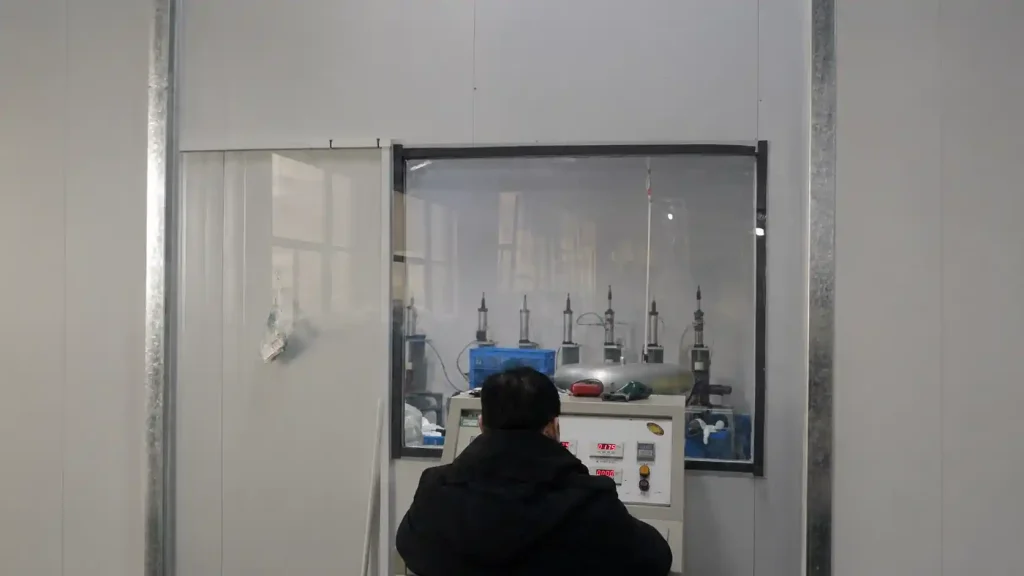
YIEOU’s JY BLQ-17/50 elbow surge arrester is designed for installation on a compatible 200A loadbreak bushing interface. It is used to limit incoming overvoltage waves and protect medium-voltage cables, transformers, switchgear and related equipment.
Physical fit does not confirm electrical suitability.
A surge arrester must match more than the bushing interface. The project must also confirm the system voltage, arrester rated voltage, continuous operating voltage, nominal discharge current and grounding arrangement.
An arrester selected only because it fits the port may not coordinate correctly with the network. The system neutral arrangement, insulation level and upstream protection also influence arrester selection.
This means a spare interface cannot automatically be converted into a surge-protection point without an electrical review.
The arrester changes the function of the port.
Once an elbow surge arrester is installed, the port is no longer simply unused. It becomes an active part of the overvoltage protection system.
Its grounding connection, surface condition and mechanical seating should therefore be included in routine inspection. Damage, contamination or a loose connection can affect the intended protection.
Where the system does not require an arrester at that location, a correctly rated insulated protective cap remains the more appropriate solution for an energized spare interface.
Spare Junction Ports Need the Same Protection as Equipment Bushings
Unused ways on a loadbreak junction require the same level of attention as spare transformer or switchgear interfaces.
A junction may provide several connection points for cable sectionalizing, loops, taps or future expansion. During the first project stage, only some of these ways may be connected to loadbreak elbows. The remaining ports still belong to the energized junction assembly and must be protected accordingly.
YIEOU’s JY MP-15kV 200A loadbreak junction is designed for use with comparably rated 15kV loadbreak elbows in installations such as pad-mounted equipment and underground vaults. The junction supports fully shielded, separable cable arrangements when matched with compatible components.
Every energized way needs a rated accessory.
An unused junction port should receive a compatible insulated protective cap before the system is energized. A temporary plastic cover, open interface or loosely fitted component is not sufficient.
The cap should remain within the same voltage, current and interface family as the junction. Its grounding lead should be connected, and the installation should leave enough room for inspection and future removal.
When the port is later used for network expansion, the cap can be removed under the approved operating procedure and replaced with a compatible loadbreak elbow or other planned accessory.
Future expansion must be electrically reviewed.
Protecting a spare port does not confirm that the network can support an additional feeder.
Before using the reserved interface, the project should review:
- Available circuit capacity
- Cable conductor size
- Transformer loading
- Protection settings
- Fault-current level
- Junction rating
- Grounding arrangement
- Cable routing and operating space
The physical availability of a 200A connection point is only one part of the expansion decision.
Different Port Conditions Need Different Accessories
The accessory should be selected according to the actual condition and intended role of the interface.
Table 1: Protection Methods for 200A Spare Interfaces
| Interface condition | Suitable accessory | Main purpose | Critical check |
| Energized and unused | Insulated protective cap | Insulation, sealing and shielding | Confirm interface compatibility and grounding |
| De-energized for maintenance | Grounding elbow | Establish a visible grounding point | Test and confirm the circuit is de-energized |
| Assigned to surge protection | Elbow surge arrester | Limit lightning and switching overvoltage | Confirm system voltage and protection coordination |
| Temporarily covered during shipment | Shipping or dust cap | Prevent contamination before installation | Remove or verify before energization |
| Reserved for future cable connection | Insulated protective cap | Protect the port until expansion | Recheck load and protection capacity before use |
| Connected to an operating cable | Loadbreak elbow connector | Complete the cable-to-equipment connection | Match cable dimensions, contact and bushing interface |
This distinction should be reflected in equipment drawings, material lists and site identification. Labeling every covered interface simply as “spare” is not enough. The drawing should show whether the port is energized, grounded, assigned to surge protection or reserved for a future cable circuit.
The Interface Must Stay Clean and Undamaged
A spare port may remain unused for months or years. During that time, its condition must be preserved.
Even when an insulated cap is installed, poor handling during construction or maintenance can damage the interface. Cable pulling equipment, tools, loose hardware and unsupported conductors can strike the cap or grounding lead.
Clean the interface before assembly.
The mating surfaces should be checked for dust, water, metal particles, packaging residue and physical damage. Cleaning materials and lubricant should be suitable for the specific accessory.
Excess lubricant should not be used to hide scratches or compensate for a poor fit. A damaged bushing or cap should be replaced rather than forced into service.
Where a cap has been removed during inspection, both mating surfaces should be cleaned again before reassembly. Placing a removed cap on the ground or an unclean cabinet surface can introduce contamination.
Protect the port from cable force.
A protective cap is not designed to carry the weight or bending force of a nearby cable. Cable routing should prevent conductors from pressing against the cap, grounding lead or adjacent junction interfaces.
This is particularly important in compact cable branch boxes and transformer compartments. A layout may appear acceptable before the cables are terminated, but conductor stiffness can create significant force after installation.
Adequate cable support, bending clearance and operating space should therefore be planned before the equipment is manufactured or installed.
Spare Ports Must Be Included in the Project Drawing
Spare-interface protection should be confirmed during system design rather than left for the installation team to decide on site.
A one-line diagram may show the electrical circuit but not the physical condition of every bushing or junction way. Equipment layout drawings and bills of materials should therefore identify the accessory fitted to each connection point.
Every port needs a defined operating condition.
The project documentation should indicate whether each port is:
- Connected to an operating cable
- Energized and capped
- De-energized and grounded
- Connected to a surge arrester
- Reserved for later expansion
- Used as a temporary parking or test position
This prevents confusion during manufacturing, assembly and commissioning.
For example, a four-way junction with only three operating cables still requires a confirmed accessory for the fourth way. Leaving the decision until commissioning can delay energization if the correct cap is not available.
The accessory list must match the interface count.
When reviewing an order, the number of caps, grounding elbows, surge arresters and loadbreak elbows should be compared with the number of equipment interfaces.
The check should include separately supplied transformer bushings, junction ways and standoff positions. Small accessories are easily omitted when the main focus is placed on cables, transformers and switchgear.
At YIEOU, we can review the proposed 200A configuration using the project drawing, equipment interface information and required accessory quantities before production. This is more reliable than selecting each component independently by product name.
YIEOU Confirms the Complete 200A Configuration
A dependable spare-port arrangement depends on coordinated manufacturing and technical confirmation.
YIEOU produces a range of American-style medium-voltage accessories, including 200A loadbreak junctions, grounding elbows, insulated protective caps, casing components and elbow surge arresters. Because these accessories can appear in the same connection system, their interfaces and intended functions should be reviewed together.
Product matching starts with project data.
Before confirming the configuration, the following information is useful:
- System rated voltage
- Equipment bushing or junction model
- Interface drawing
- Number of active and spare ports
- Intended status of each spare port
- Grounding arrangement
- Surge-protection requirement
- Indoor, outdoor or submersible installation condition
- Future expansion plan
- Required product labels and packaging
This information allows us to distinguish an energized spare interface from a maintenance grounding point or surge-protection position.
Samples can confirm fit before batch production.
For OEM, distribution or project orders, samples may be used to review interface fit, markings, packaging and configuration details before mass production. YIEOU’s manufacturing support includes technical confirmation, sample coordination, production arrangement, quality control and long-term supply cooperation for medium- and high-voltage electrical accessories.
The purpose of sample confirmation is not only to inspect the appearance. It also helps verify that the selected accessory corresponds to the equipment interface and project drawing.
A correctly protected spare port should be treated as part of the completed system—not as an accessory to be added after everything else has been ordered.
Common Spare-Port Mistakes Must Be Removed Before Energization
Several recurring mistakes can be prevented through a final interface inspection.
Do not leave the shipping cover in service.
Confirm that every energized spare interface has an operational insulated protective cap rather than a transport cover.
Do not use a grounding elbow as a normal cap.
A grounding elbow belongs to an approved de-energized maintenance procedure. It does not replace an insulated cap on an energized port.
Do not install an arrester without system coordination.
An elbow surge arrester must match the network voltage and protection design. An available port alone is not enough reason to install one.
Do not ignore the grounding lead.
The drain wire or grounding lead should be connected securely and routed away from sharp edges, moving parts and unsupported cables.
Do not assume similar-looking parts are interchangeable.
Voltage class, current class, interface dimensions and accessory family must all match.
Do not energize an unidentified interface.
Where the purpose or accessory rating cannot be confirmed, the port should remain out of service until the documentation and components have been checked.
FAQ
Can an energized 200A spare port be left empty?
No. An energized spare interface should be fitted with a compatible insulated protective cap that provides the required insulation, sealing and shielding.
Can a shipping cap remain on the bushing after energization?
Only when it is specifically identified and rated as an energized-service protective accessory. A normal transport or dust cover should not be assumed suitable.
Is a grounding elbow suitable for an energized spare interface?
No. A grounding elbow should only be installed after the circuit has been isolated, tested and confirmed de-energized under an approved procedure.
Can an elbow surge arrester be installed on any available 200A port?
No. The interface must be compatible, and the arrester must match the system voltage, grounding method and protection-coordination requirements.
What information should be provided when ordering spare-port accessories?
Provide the system voltage, equipment interface or bushing information, number of spare ports, intended condition of each port, grounding arrangement and project drawings.
Conclusion
A spare port in a 200A separable connector system is still an active part of the medium-voltage insulation arrangement. It must not be left exposed or protected with an unidentified temporary cover.
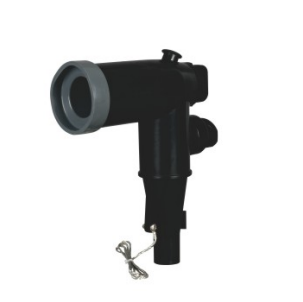
An energized unused port normally requires a compatible insulated protective cap. A de-energized interface used during maintenance may require a grounding elbow. A port assigned to overvoltage protection may use an elbow surge arrester. These accessories can belong to the same 200A interface family, but they cannot replace one another.
Reliable protection also depends on correct seating, clean mating surfaces, secure grounding, adequate cable clearance and clear project documentation. The condition of every junction way, transformer bushing and reserved interface should be confirmed before energization.
YIEOU can match American-style 200A separable connector accessories according to your system voltage, equipment interface, port arrangement and project drawing. Contact us to confirm the correct insulated caps, grounding elbows, junctions and surge-protection accessories for your cable connection system.