I. Product Overview
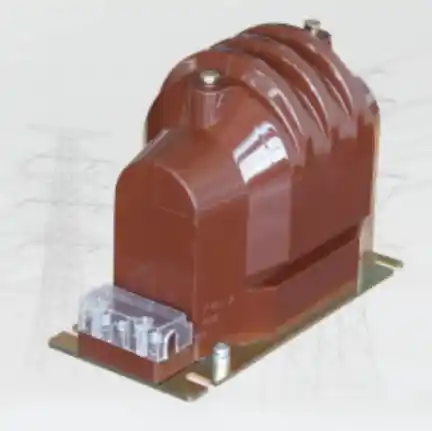
JDZ9-10 / JDZQN-10(国家电网标准)电压互感器 这是一款全封闭、环氧树脂浇注、干式电压互感器,专为 10kV(Um=12kV)户内交流电力系统设计。符合国家电网标准化设计规范,采用整体浇注工艺,集绝缘、耐污闪、高可靠性保护功能于一体。主要用于 10kV 户内中压开关柜内的电压测量、电能计量、继电保护及绝缘监测,广泛应用于国家电网标准化配电工程、箱式变电站及开关站。
II. Key Product Features
绝缘与电气性能
State Grid Standard Insulation Design: The unit is formed via vacuum casting with epoxy resin, ensuring a void-free interior. Insulation performance fully complies with State Grid technical specifications, capable of withstanding 12kV system operating voltage as well as power-frequency and impulse withstand voltage tests. Partial discharge is ≤10pC, ensuring no risk of insulation aging during long-term operation.
Wide Voltage Ratio Compatibility: Supports standard voltage ratios (e.g., 10/0.1kV, 10/0.1/0.1kV). Metering accuracy reaches Class 0.2S, and protection classes can be customized to 3P or 6P, meeting the high-precision requirements for metering and protection in State Grid projects.
High Pollution-Flashover Resistance: The high-voltage side features a multi-layer shed insulation structure with a long creepage distance, offering excellent resistance to pollution flashover. It is suitable for the polluted environments often encountered in State Grid projects, minimizing the risk of surface flashover.
Low-Loss, High-Reliability Design: The core is constructed from high-quality stacked silicon steel sheets, and windings use enameled copper wire. This ensures low operating losses and minimal heat generation. The unit offers stable performance and can withstand system switching overvoltages and lightning impulse overvoltages.
结构和安装特点
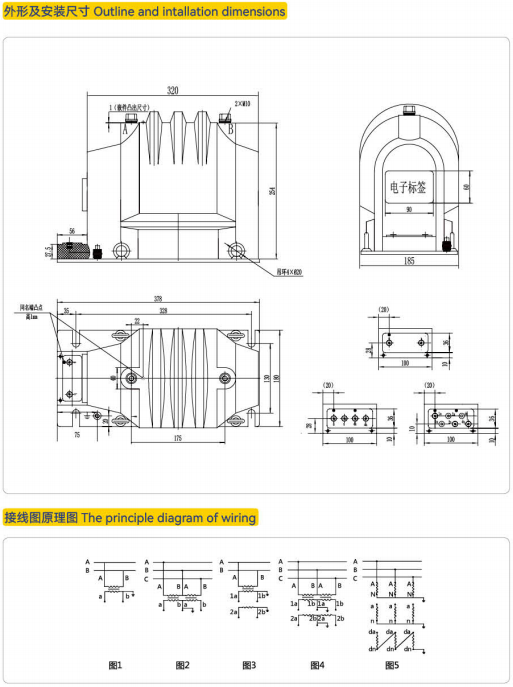
国家电网标准化结构:外形尺寸和安装孔位完全符合国家电网标准化设计规范。可直接替换传统产品,并兼容标准 switchgear 安装,例如 KYN28 系列。• 全封闭干式结构:整体浇铸,无裸露带电部件;具有 IP20 防护等级和无油设计,消除了火灾隐患,适用于室内无油配电应用。
Clearly marked terminals: Secondary terminals feature transparent protective covers and clear labeling for convenient wiring; the design prevents miswiring and short circuits, with a layout that complies with State Grid specifications for secondary circuit wiring.
Flexible installation: The metal base features standard mounting holes for secure bolt-down installation; designed for horizontal mounting within indoor cabinets, ensuring stability and excellent vibration resistance.
Operational and maintenance characteristics
Maintenance-free operation: The dry-type, oil-free structure eliminates leakage and fire risks; the epoxy resin casting offers high mechanical strength, impact resistance, and aging resistance, ensuring maintenance-free long-term operation and reduced O&M costs in line with State Grid requirements for high reliability and minimal maintenance.
Wide operating temperature range: Operates in ambient temperatures from -30°C to +70°C; the epoxy resin maintains stable performance at temperature extremes without risk of embrittlement or deformation, making it suitable for the diverse climatic conditions of State Grid projects.
Traceable quality system: Manufacturing processes comply with State Grid supplier quality control requirements; complete factory acceptance test and type test reports are available, ensuring performance traceability and alignment with State Grid project acceptance standards.
III. Technical Parameters (Typical Specifications)
| 参数类别 | 参数 | 规格 |
| 电气参数 | 系统电压 | 10千伏交流电(额定电压Um=12千伏) |
| 额定频率 | 50赫兹 | |
| 额定一次电压 | 10千伏 | |
| 额定二次电压 | 100V(计量/保护);100/√3 V(绝缘监测,JDZQN型) | |
| 计量精度等级 | 0.2 / 0.5 / 1(提供0.2S类) | |
| 保护精度等级 | 3P / 6P | |
| 工频耐压(高压端) | 42千伏 / 1分钟,无击穿 | |
| 浪涌耐压(峰值) | 75千伏,无击穿 | |
| 局部放电水平 | ≤10皮库仑 | |
| 绝缘电阻(高压对低压及对地) | ≥1000兆欧 | |
| Structural & Material Parameters | 绝缘介质 | 全环氧树脂浇注 |
| 保护等级 | IP20 | |
| 安装方式 | 室内柱式螺栓安装(SGCC标准孔距) | |
| 绝缘热等级 | B级(130°C) | |
| 环境参数 | 适用高度 | ≤2000米(可高海拔定制) |
| | 工作环境温度 | -30°C 至 +70°C | |
| 存储环境温度 | -40°C 至 +85°C | |
| 相对湿度 | ≤95% (无冷凝) | |
| 适用标准 | 国家标准 / SGCC 规范 | GB 1207 电压互感器;GB/T 20840 系列;SGCC 标准化设备技术规范 |
IV. Scope of Application
Applicable Voltage Level: 10kV (Um=12kV) indoor AC power systems; compatible with State Grid standardized power distribution projects. 2. Typical Application Scenarios:
○ Voltage measurement, energy metering, and relay protection for State Grid standardized indoor medium-voltage switchgear and box-type substations;
○ Voltage monitoring and insulation monitoring for State Grid switching station, distribution station, and distribution transformer area renovation projects;
○ 10kV distribution systems in industrial/mining enterprises, commercial buildings, and industrial parks; compliant with State Grid project acceptance standards;
○ Indoor distribution scenarios requiring high resistance to pollution flashover and high reliability; compliant with State Grid project quality control requirements.
Functions and Uses: Proportionally converts high voltage from the power system into a standard low voltage (100V) to provide voltage signals for metering instruments, protection devices, and control equipment, while achieving electrical isolation between the primary and secondary systems. The JDZQN model can also serve as a voltage signal source for insulation monitoring devices to detect system ground faults, fully meeting State Grid project requirements for metering, protection, and insulation monitoring.
V. Operating Conditions
正常运行条件
- 海拔:≤2000米;
- Ambient temperature: -30℃ to +70℃, without drastic temperature fluctuations;
- 相对湿度:≤95%(不凝结);
- Environmental conditions: Free from corrosive gases, flammable or explosive media, severe vibration or shock, and significant dust or salt spray;
- Installation method: Indoor post-type installation; avoid direct sunlight, rain, and condensation; compatible with installation spaces in State Grid standard switchgear.
特殊操作条件(需要定制)
- 海拔超过2000米;
- Ambient temperature outside the -30℃ to +70℃ range;
- Environments with severe pollution, salt spray, or chemical corrosion;
- Conditions involving strong vibration or heavy shock;
- Scenarios requiring non-standard voltage ratios, accuracy classes, or installation dimensions.
VI. Installation and Maintenance
安装要求
Construction Preparation: Inspect the external appearance of the voltage transformer; ensure the cast body is free of cracks, air bubbles, and damage, terminal markings are clear, and all accessories are present. Verify that the model, specifications, voltage ratio, and accuracy class align with the State Grid project design requirements, and confirm the product holds the necessary qualification documents as a qualified State Grid supplier.
Installation and Securing: Position the voltage transformer at the designated location within the switchgear cabinet. Secure it using bolts through the standard bottom mounting holes, ensuring a firm installation free of looseness or misalignment. The mounting surface must be level to avoid uneven stress or tilting.
High-Voltage Side Wiring: Connect high-voltage terminals according to State Grid project wiring specifications. Ensure connections are tight and provide good contact. Maintain sufficient safety clearance between high-voltage leads and grounded parts or other live components to prevent discharge.
Low-Voltage Side Wiring: Connect low-voltage terminals according to markings. Wire the metering, protection, and insulation monitoring circuits separately to ensure correctness. Strictly prohibit short circuits in secondary circuits; ensure reliable grounding (single-point grounding) to prevent overvoltage. Wiring must comply with State Grid secondary circuit specifications.
Insulation Inspection: After installation, test the voltage transformer’s insulation resistance (high-voltage to low-voltage/ground, and low-voltage to ground) to ensure insulation performance meets requirements. Verify correct secondary circuit wiring, ensuring there are no short circuits or open circuits.
Maintenance Points
Regularly inspect the external appearance of the voltage transformer. Ensure the cast body is free of cracks, damage, and discharge marks; high-voltage terminals are free of looseness and oxidation; and shed surfaces are free of accumulated contamination.
Regularly inspect high-voltage and low-voltage wiring. Ensure connections are tight and show no signs of overheating or discoloration; verify reliable grounding of low-voltage circuits and the absence of short-circuit or open-circuit risks.
Periodically test insulation resistance and voltage ratio to ensure metering and protection accuracy meet State Grid project requirements; simultaneously verify the proper functioning of insulation monitoring features.
Clean dust and dirt from the voltage transformer surface; prevent the adhesion of oil or corrosive substances, and keep the equipment dry and clean.
If abnormalities such as cracks, discharge, overheating, or voltage ratio deviations occur in the voltage transformer, the power supply must be cut off immediately for inspection, and the equipment replaced if necessary; operation with faults is strictly prohibited, and the project management team must be notified.
VII. Precautions
- Short-circuiting the secondary winding is strictly prohibited; a short circuit in the secondary circuit during operation generates high currents, endangering both equipment and personnel safety. During maintenance, the secondary circuit must be reliably open-circuited and grounded.
- During installation, avoid knocking or striking the voltage transformer’s cast body and the sheds of the high-voltage terminal to prevent epoxy resin cracking or insulation damage, which could compromise the equipment’s insulation performance and resistance to pollution flashover.
- High-voltage side wiring must utilize dedicated insulated leads, ensuring sufficient safety clearance from grounded parts and other live components to prevent phase-to-phase or phase-to-ground discharge; wiring must comply with State Grid project technical specifications.
- Equipment grounding must be reliable; the grounding terminal on the base must be securely connected to the cabinet’s grounding busbar to ensure effective grounding in compliance with State Grid project grounding standards.
- Store in a dry, ventilated, and cool environment, avoiding direct sunlight, high temperatures, humidity, and crushing forces to prevent aging or deformation of the cast body; implement moisture-proof and anti-corrosion measures during storage.
- Installation, commissioning, and maintenance must be performed by qualified electrical professionals in strict accordance with electrical safety operating procedures and State Grid project construction specifications.
VIII. Standard Configuration List
| 不。 | 姓名 | 目的 |
|---|---|---|
| 1 | JDZ9-10 / JDZQN-10(State Grid Type)Voltage Transformer | Core Unit, providingVoltageTransformation / Isolation Signal Acquisition, Standard |
| 2 | Mounting Bolts / Washers | forVoltage TransformerFixed Installation, Standard |
| 3 | Secondary TerminalTransparent Protective Cover | Protection Terminal, PreventingIncorrect Connection / Short Circuit |
| 4 | 产品手册 | Installation / Operation MaintenanceGuide Document, Installation |
| 5 | Factory Test Report | Quality PerformanceCertification Document, Test Data |
IX. Applicable Standards and Certifications
The product complies with national standards such as GB 1207 “Voltage Transformers,” GB/T 20840.1 “Instrument Transformers – Part 1: General Requirements,” and GB/T 20840.3 “Instrument Transformers – Part 3: Additional Requirements for Inductive Voltage Transformers.” It also meets the technical specifications for standardized equipment set by the State Grid Corporation of China (SGCC). The manufacturer holds qualified supplier status with the State Grid, and the product’s performance meets the operational requirements of 10kV power systems in State Grid projects.