
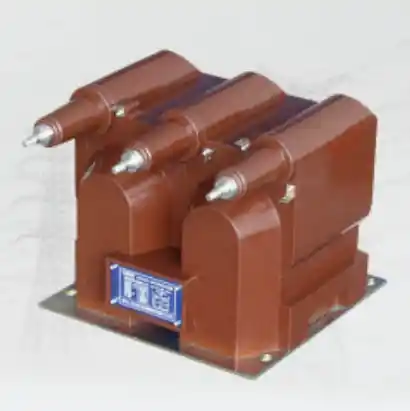
Product Overview
The JSZV18-10R Combined Voltage Transformer is a three-phase integrated, fully enclosed, epoxy resin cast voltage transformer designed for indoor 10 kV AC power systems with a maximum system voltage of 12 kV.
The product features a three-phase integrated cast structure with built-in high-voltage fuses. It combines voltage transformation, electrical isolation, and overcurrent protection within a single unit and supports three-phase voltage measurement, energy metering, relay protection, and insulation monitoring.
The transformer is widely used in 10 kV indoor medium-voltage switchgear, box-type substations, switching stations, and other distribution systems. Its compact integrated design is particularly suitable for space-saving switchgear and applications requiring simultaneous three-phase voltage monitoring.
Product Features
Insulation and Electrical Performance
- Three-phase integrated cast insulation:
The three-phase windings are enclosed within a single body manufactured using an epoxy resin vacuum-casting process. The solid insulation contains no internal air gaps and provides excellent dielectric performance. - Suitable for 12 kV systems:
The transformer can withstand the operating voltage, power-frequency withstand voltage, and lightning impulse withstand voltage requirements of 10 kV systems with a maximum system voltage of 12 kV. - Oil-free dry-type construction:
The product contains no insulating oil, eliminating the risks of oil leakage, oil contamination, and oil-related fire hazards. It is suitable for indoor oil-free distribution systems. - Integrated three-phase fuse protection:
An independent high-voltage fuse is installed on each phase. The fuse can operate rapidly in the event of a single-phase earth fault, phase-to-phase overcurrent, or short circuit, helping protect the voltage transformer from damage. - Simplified primary-circuit design:
The built-in fuses reduce the need for separate external fuse assemblies, simplify the switchgear primary circuit, reduce installation space, and lower equipment costs. - Multiple voltage ratios:
Standard three-phase voltage ratios such as 10/0.1 kV and 10/0.1/0.1 kV are available. - Multiple accuracy classes:
Metering accuracy classes up to Class 0.2 are available, while protection accuracy classes such as 3P and 6P can be customized. - Insulation-monitoring capability:
An optional 100/3 V secondary output can be provided for insulation monitoring and earth-fault detection. The product can be configured for three-phase, five-limb voltage transformer connection arrangements. - Low partial discharge:
The advanced casting process limits partial discharge to no more than 10 pC, helping reduce insulation ageing and improve long-term operating reliability.
Structural and Installation Features
- Fully enclosed three-phase dry-type structure:
The three-phase windings are integrally cast into a single enclosed body with no exposed internal live components. - IP20 protection rating:
The product is designed for installation inside indoor electrical equipment and provides an IP20 protection rating. - Compact space-saving design:
Compared with three separate single-phase voltage transformers, the integrated structure can reduce switchgear installation space by approximately 30%. - Integrated replaceable fuses:
Each high-voltage phase is equipped with an independent replaceable fuse. No separate fuse mounting bracket is required, reducing the number of components inside the switchgear. - Clearly identified secondary terminals:
The three-phase secondary terminals are grouped and clearly marked for convenient wiring. Metering, protection, and insulation-monitoring circuits can be connected separately. - Secure bolt mounting:
The metal base includes mounting holes for horizontal bolt installation inside indoor switchgear. The structure provides reliable mechanical stability and vibration resistance.
Operation and Maintenance Features
- Low-maintenance operation:
The dry-type, oil-free construction eliminates oil leakage and oil-related fire hazards. The epoxy resin body provides high mechanical strength, impact resistance, and ageing resistance. - Convenient fuse replacement:
The built-in fuses can be replaced without special tools after the equipment has been safely de-energised, improving maintenance efficiency. - Wide operating temperature range:
The transformer can operate at ambient temperatures from -30°C to +70°C. The epoxy resin maintains stable insulation and mechanical properties without becoming brittle or deformed. - High-reliability construction:
The magnetic cores are made from high-quality laminated silicon steel sheets, while the windings are wound with enamelled copper wire. - Low operating losses:
The optimized magnetic core and winding structure provides low operating losses, limited temperature rise, and stable measurement accuracy. - Reliable protection performance:
The transformer can withstand switching and lightning overvoltages within its specified insulation level. The built-in fuses provide reliable protection against primary-side overcurrent and short-circuit faults.
Technical Specifications
Electrical Parameters
| Parameter | Specification |
|---|---|
| Applicable System Voltage | 10 kV AC, Um = 12 kV |
| Rated Frequency | 50 Hz |
| Rated Primary Voltage | 10 kV, three-phase |
| Rated Secondary Voltage | 100 V for three-phase metering and protection; optional 100/3 V for insulation monitoring |
| Metering Accuracy Class | Class 0.2 / 0.5 / 1 |
| Protection Accuracy Class | 3P / 6P |
| Power-Frequency Withstand Voltage | 42 kV for 1 minute at the high-voltage terminal, without breakdown |
| Lightning Impulse Withstand Voltage | 75 kV peak, without breakdown |
| Partial Discharge | ≤10 pC |
| Insulation Resistance | ≥1,000 MΩ between high voltage, low voltage, and earth |
| Rated Current of Built-In Fuse | 0.5 A per phase as standard; customizable |
Structural and Material Parameters
| Parameter | Specification |
|---|---|
| Insulating Medium | Fully cast epoxy resin with integrated three-phase construction |
| Protection Rating | IP20 |
| Installation Type | Indoor post-type bolt mounting |
| Thermal Class | Class B, 130°C |
Environmental Parameters
| Parameter | Specification |
|---|---|
| Installation Altitude | ≤2,000 m; high-altitude versions available |
| Operating Temperature | -30°C to +70°C |
| Storage Temperature | -40°C to +85°C |
| Relative Humidity | ≤95%, non-condensing |
Applicable Standards
| Standard | Description |
|---|---|
| GB 1207 | Voltage Transformers |
| GB/T 20840 Series | Instrument Transformers |
| GB 15166.2 | High-Voltage Alternating-Current Fuses |
Applications
Applicable Voltage Level
The JSZV18-10R Combined Voltage Transformer is suitable for indoor 10 kV AC power systems with a maximum system voltage of 12 kV.
Typical Applications
- Three-phase voltage measurement in KYN28 series indoor medium-voltage switchgear
- Energy metering and relay protection in box-type substations
- Voltage monitoring in distribution and switching stations
- 10 kV distribution systems in industrial and mining enterprises
- Commercial buildings and industrial parks
- Three-phase voltage monitoring, control, and protection signal acquisition in power automation systems
- Compact switchgear requiring fewer primary-circuit components
- Three-phase, five-limb voltage transformer connection arrangements
- Applications requiring integrated primary-side fuse protection
Main Functions
The transformer converts the three-phase system voltage into a standardized secondary voltage, normally 100 V, at a specified ratio.
It supplies three-phase voltage signals to:
- Energy meters
- Measuring instruments
- Relay protection devices
- Monitoring equipment
- Control systems
- Insulation monitoring devices
The transformer also provides electrical isolation between the primary and secondary systems, helping protect connected equipment and operating personnel.
Each phase is equipped with a built-in fuse. If primary-side overcurrent or a short circuit occurs, the corresponding fuse operates rapidly to isolate the fault and help protect the transformer.
Where an optional insulation-monitoring winding is provided, the transformer can also supply a residual voltage signal for system earth-fault detection.
Operating Conditions
Normal Operating Conditions
- Installation altitude: no more than 2,000 m
- Ambient temperature: -30°C to +70°C
- Severe or sudden temperature changes should be avoided
- Relative humidity: no more than 95%, non-condensing
- The environment should be free from corrosive gases
- Flammable or explosive substances are not permitted
- Severe vibration and mechanical impact should be avoided
- Significant dust and salt-spray contamination should be avoided
- Indoor post-type installation
- Direct sunlight, rain, and condensation should be avoided
Special Operating Conditions
Customized products are required for:
- Installation altitudes above 2,000 m
- Ambient temperatures outside the range of -30°C to +70°C
- Severe pollution or salt-spray environments
- Chemically corrosive environments
- Applications involving strong vibration or mechanical impact
- Non-standard voltage ratios
- Special accuracy classes
- Non-standard fuse ratings or characteristics
Installation and Maintenance
Installation Requirements
- Pre-installation inspection:
Inspect the voltage transformer and confirm that the epoxy resin body is free from cracks, bubbles, mechanical damage, and other visible defects. Check that all terminal markings are clear and that the supplied accessories are complete. Verify that the model, specifications, voltage ratio, accuracy class, and fuse parameters match the system design requirements. Confirm that the fuse on each phase is complete and undamaged. - Mounting:
Position the transformer at the specified location inside the switchgear and secure it using bolts through the mounting holes in the base. Ensure that the transformer is firmly installed without looseness or displacement. The mounting surface should be level to avoid uneven mechanical stress. - High-voltage-side connection:
Connect the three-phase high-voltage terminals according to the system design. Ensure that all connections are securely tightened and provide reliable electrical contact. Maintain adequate electrical clearance between high-voltage conductors, earthed components, and other live parts. - Secondary-side connection:
Connect the three-phase secondary terminals according to their markings. Metering, protection, and insulation-monitoring circuits must be wired separately and correctly. The voltage transformer secondary circuits must never be short-circuited. One point of the required secondary circuit must be reliably earthed in accordance with the system design and applicable electrical safety requirements. - Insulation inspection:
After installation, measure the insulation resistance between:- High voltage and low voltage
- High voltage and earth
- Low voltage and earth
Maintenance Requirements
- Regularly inspect the epoxy resin body for cracks, mechanical damage, discharge marks, and contamination.
- Check the high-voltage terminals for looseness, oxidation, and abnormal heating.
- Inspect the fuse on each phase and confirm that it has not operated or sustained visible damage.
- Regularly inspect high-voltage and low-voltage connections for looseness, overheating, and discoloration.
- Confirm that the secondary circuits remain correctly connected and reliably earthed.
- Periodically test the insulation resistance and three-phase voltage ratio.
- Verify that the metering and protection accuracy remains within the specified limits.
- Check the operating condition of each built-in fuse.
- Clean dust and contamination from the transformer surface.
- Prevent oil and corrosive substances from contacting the epoxy resin body.
- If a fuse has operated or become damaged, de-energise the equipment and replace it with a fuse of the same model and rating.
- Do not use a fuse with an unspecified or incompatible rating.
- If cracking, electrical discharge, overheating, or excessive voltage-ratio error is detected, immediately de-energise and inspect the equipment. Replace the transformer where necessary.
Precautions
- The voltage transformer secondary windings must never be short-circuited while the primary system is energised. A secondary short circuit may produce excessive current and create a serious risk to equipment and personnel.
- During maintenance, the transformer must be de-energised and the secondary circuits safely isolated and earthed in accordance with applicable procedures.
- Avoid impact or collision with the epoxy resin body and high-voltage terminals during transportation and installation. Mechanical damage may reduce insulation performance.
- Use suitable insulated conductors for high-voltage connections. Maintain adequate electrical clearance from earthed components and other live parts to prevent phase-to-phase or phase-to-earth discharge.
- Confirm the correct phase sequence during three-phase wiring. Incorrect phase connections may affect metering and protection functions.
- The equipment must be reliably earthed. The grounding terminal on the metal base must be securely connected to the switchgear grounding busbar.
- Store the product in a dry, ventilated, and shaded environment. Avoid direct sunlight, high temperatures, moisture, compression, and mechanical impact.
- Protect the built-in fuses from moisture and mechanical damage during storage.
- Fuse replacement must only be carried out after the equipment has been completely de-energised. Live replacement is strictly prohibited.
- Installation, commissioning, fuse replacement, and maintenance must be carried out by qualified electrical personnel in accordance with applicable electrical safety procedures.
Standard Supply List
| No. | Item | Function |
|---|---|---|
| 1 | JSZV18-10R Combined Voltage Transformer | Main device for three-phase voltage transformation, electrical isolation, and primary-side protection |
| 2 | Mounting Bolts and Washers | Used to secure the voltage transformer during installation |
| 3 | Secondary Terminal Cover | Protects the low-voltage terminals and helps prevent incorrect connections or short circuits |
| 4 | Product Instruction Manual | Provides installation, operation, maintenance, wiring, and fuse-replacement guidance |
| 5 | Product Certificate and Factory Test Report | Provides product quality and performance documentation, including three-phase voltage-ratio and accuracy test data |
| 6 | Spare Fuse, Optional | Used to replace an operated or damaged built-in fuse |
Applicable Standards and Certification
The product complies with the following standards:
- GB 1207, Voltage Transformers
- GB/T 20840.1, Instrument Transformers—Part 1: General Requirements
- GB/T 20840.3, Instrument Transformers—Part 3: Additional Requirements for Inductive Voltage Transformers
- GB 15166.2, High-Voltage Alternating-Current Fuses
The product has passed the applicable type tests, and its performance meets the operating requirements of indoor 10 kV power systems.
