
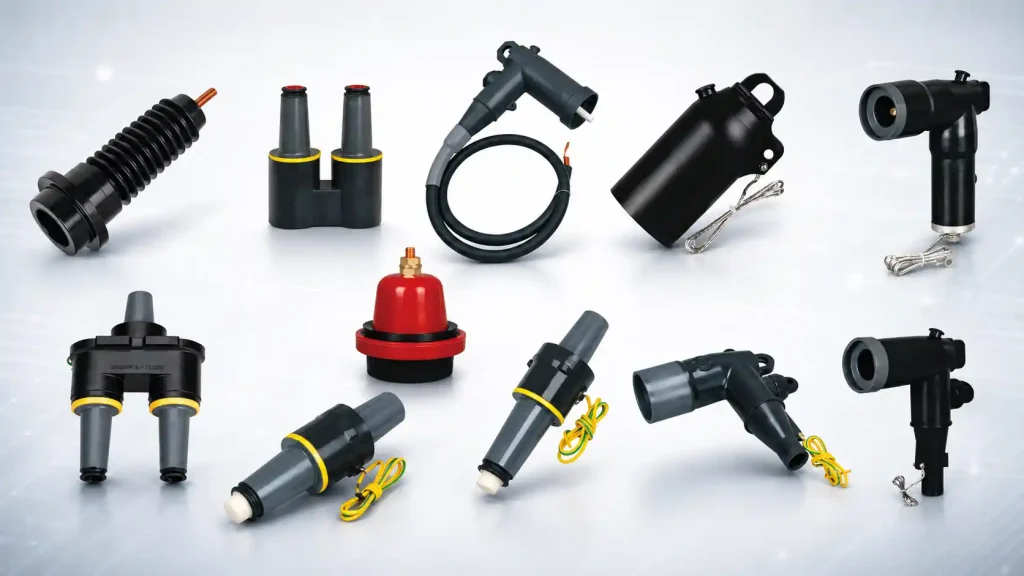
When a medium-voltage project specifies a Separable Connector, terms such as loadbreak, deadbreak, elbow, and T-body often appear on the same drawing or product list. It is easy to treat them as four completely separate connector types, but that is not quite how these terms work.
Loadbreak and deadbreak describe how a connector can be operated. Elbow and T-body describe the physical configuration of the connector.
This distinction matters because a connector can belong to both categories at the same time. A 200A loadbreak elbow, for example, is an elbow-shaped Separable Connector designed for specified loadbreak operation. A 600A deadbreak T-body combines a T-shaped structure with a deadbreak operating requirement.
For transformers, ring main units, switchgear, compact substations, cable branch boxes, and underground distribution systems, understanding these differences makes it easier to select the correct connector, bushing interface, cable size, and supporting accessories.
Separable Connector Types Are Classified in Two Different Ways
Before comparing individual designs, it helps to separate the terminology into two groups.
Loadbreak and Deadbreak Describe Operation
The first question is whether the Separable Connector is designed to be disconnected under specified load conditions or only after the circuit has been de-energized.
A loadbreak connector is designed for defined loadbreak operations when it is used with the correct compatible interface, operating tools, ratings, and approved procedures.
A deadbreak connector, by contrast, must not be disconnected while carrying load current. The circuit needs to be properly de-energized and handled according to the required isolation and safety procedure before the connection is separated.
This is an operating difference, not simply a difference in appearance.
Elbow and T-Body Describe Connector Shape
The second question is how the cable needs to approach and connect to the equipment.
An elbow connector uses an angled body, usually providing a compact 90-degree cable-to-equipment connection.
A T-body connector uses a T-shaped body and is commonly selected for higher-current main circuit connections, especially where the connection structure needs to work with corresponding bushings, plugs, adapters, or other system components.
This means “loadbreak” does not automatically mean “elbow,” and “deadbreak” does not literally mean “T-body.” However, certain combinations are much more common in actual medium-voltage distribution systems.
What Is a Loadbreak Separable Connector?
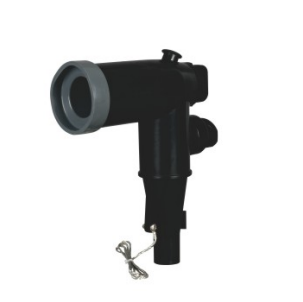
A loadbreak Separable Connector is intended for applications where the connection system needs a defined loadbreak operating capability.
In many medium-voltage distribution systems, this is commonly associated with 200A elbow connector systems.
The connector normally works together with a compatible loadbreak bushing insert, integral bushing, junction, or other matching interface. The complete connection needs to be considered as one coordinated system rather than as several independent parts.
Typical applications include:
- pad-mounted transformers;
- cable branch boxes;
- underground distribution networks;
- compact distribution equipment;
- radial or loop-feed systems;
- connection points where sectionalizing or network reconfiguration may be required.
One important point is that “loadbreak” does not mean a connector can simply be pulled apart whenever current is present.
The connector, mating interface, voltage class, current rating, operating procedure, and tools must all be suitable for the intended operation. The operating condition should always be confirmed as part of the system design and maintenance procedure.
Why Are 200A Loadbreak Elbows So Common?
The 200A loadbreak elbow connector is one of the most recognizable forms of Separable Connector used in underground medium-voltage distribution.
Its 90-degree configuration allows the cable to approach the equipment interface without requiring a straight connection directly in front of the bushing. This can be especially useful inside pad-mounted equipment and cable compartments where installation space is limited.
A typical connection may include:
Medium-voltage cable → cable lug → loadbreak elbow → bushing insert → equipment bushing well
Depending on the system layout, the same connector family may also work with junctions, grounding elbows, insulating caps, and surge protection accessories.
The result is not simply a removable cable termination. It is a coordinated cable connection system that can support installation, isolation, maintenance, and network arrangement.
What Is a Deadbreak Separable Connector?
A deadbreak Separable Connector is designed to be separated only when the circuit is de-energized.
This type is commonly used where the connection is expected to remain in service for long periods and frequent loadbreak operation is not required.
Higher-current feeder connections are a common example.
In many medium-voltage systems, 600A deadbreak connectors are used for main feeder connections, transformer interfaces, switchgear connections, cable branch systems, and other locations carrying higher continuous current than typical 200A loadbreak circuits.
Because the connector is not intended for loadbreak operation, maintenance planning is different.
Before disconnecting the connector, the circuit needs to be isolated and verified according to the applicable operating procedure. Proper grounding and testing requirements must also be considered before work begins.
For a project engineer or purchaser, the key question is therefore not simply:
“Can this connector be removed?”
The better question is:
“Under what electrical condition is this connector designed to be separated?”
That distinction determines whether a loadbreak or deadbreak system is appropriate.
When Does a Deadbreak Design Make More Sense?
Deadbreak designs are often suitable when the system prioritizes:
- higher continuous current capacity;
- stable main feeder connections;
- long-term equipment connection;
- controlled maintenance procedures;
- limited need for load switching at the connector;
- transformer or switchgear main circuit connections.
For these applications, switching is usually handled elsewhere in the electrical system.
The Separable Connector then provides an insulated and removable cable-to-equipment interface rather than acting as the primary switching point.
This is why choosing between loadbreak and deadbreak should begin with the operating philosophy of the electrical system rather than the connector shape.
What Is an Elbow Separable Connector?
An elbow connector is identified mainly by its angled body.
Instead of allowing the cable to continue straight into the equipment interface, the elbow redirects the cable path, usually by approximately 90 degrees.
This structure is particularly useful where cables enter equipment from below and need to connect to bushings positioned on a vertical panel.
The compact arrangement helps organize cable routing inside:
- pad-mounted transformers;
- RMUs;
- cable branch boxes;
- switchgear;
- compact substations;
- underground cable distribution equipment.
Elbow connectors are especially familiar in 200A loadbreak systems, but the term elbow itself refers to the connector’s physical design.
The operating capability still needs to be confirmed separately.
There are also other elbow-shaped Medium Voltage Cable Accessories, such as grounding elbows and elbow surge arresters. These may look related, but their electrical functions are different.
For this reason, a project list should clearly distinguish between a loadbreak elbow connector, grounding elbow, elbow arrester, and other elbow-type accessories.
What Is a T-Body Separable Connector?
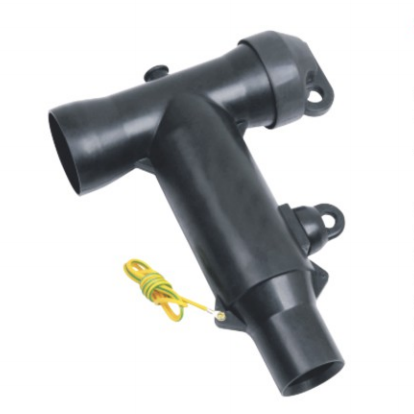
A T-body Separable Connector uses a T-shaped insulated body to create the cable-to-equipment connection.
This configuration is commonly associated with higher-current deadbreak systems, including 600A applications.
Compared with a compact 200A elbow connection, a T-body is typically used where the cable circuit requires a larger current path and a different equipment interface arrangement.
Depending on the connector system, the T-shaped structure may also allow other compatible components to be incorporated into the connection arrangement.
Typical applications include:
- transformer primary connections;
- medium-voltage switchgear;
- main feeder circuits;
- cable distribution systems;
- compact substations;
- underground distribution networks.
The T-body should not be selected only because the project has a large cable.
The current rating, voltage level, conductor size, cable insulation diameter, bushing interface, available installation space, and required accessory arrangement all need to match.
Loadbreak Elbow and Deadbreak T-Body Are Common Combinations
In practical project discussions, two combinations appear particularly often:
200A loadbreak elbow
and
600A deadbreak T-body
This is useful as a general reference, but it should not replace checking the actual connector system.
The first combination is commonly selected where a compact cable connection and defined loadbreak capability are required.
The second is commonly used for higher-current circuits where the connection remains installed during normal operation and is separated only after de-energization.
The important point is to understand what each part of the name tells you.
In 200A loadbreak elbow:
- 200A describes the current class;
- loadbreak describes the operating function;
- elbow describes the body configuration.
In 600A deadbreak T-body:
- 600A describes the current class;
- deadbreak describes the operating requirement;
- T-body describes the connector configuration.
Once the terminology is separated this way, drawings and accessory schedules become much easier to interpret.
The Equipment Interface Must Match the Connector
Choosing the correct Separable Connector is not only about choosing the cable-side component.
The equipment side matters just as much.
A 200A loadbreak elbow needs to mate with the correct loadbreak interface. Depending on the equipment design, this may involve a bushing insert installed into a bushing well or another compatible connection component.
The same principle applies to higher-current deadbreak systems.
A T-body cannot simply be installed on a bushing because the voltage and current ratings appear similar. The complete interface family must be compatible.
Before we confirm a connector configuration, the equipment-side information should therefore be checked together with the cable specification.
Cable Size Also Affects Separable Connector Selection
Two projects using the same voltage and current class may still require different connector configurations because their cables are different.
Important cable information includes:
- conductor material;
- conductor cross-sectional area;
- cable insulation diameter;
- cable construction;
- insulation type;
- shielding or screen arrangement;
- overall cable dimensions.
The cable lug and internal connector components must fit the conductor correctly, while the connector body needs to match the cable insulation range.
This is why ordering a Separable Connector only as “15kV 200A elbow” or “24kV 600A T-body” may not provide enough information for accurate matching.
Cable data should be confirmed before production or final supply.
How Do You Choose Between an Elbow and a T-Body?
The decision should start with the actual connection layout rather than appearance.
Check the Current Requirement
For a typical medium-voltage distribution branch connection, a 200A system may be appropriate.
For higher-current main feeder connections, a 600A-class system may be more suitable.
Current rating should reflect the electrical design of the circuit rather than simply using the larger option as a default.
Check Whether Loadbreak Operation Is Required
If the operating plan specifically requires a connector system with loadbreak capability, a compatible loadbreak system should be evaluated.
If the connector will normally remain connected and maintenance will only occur after the circuit is de-energized, a deadbreak system may be the more appropriate arrangement.
Check the Equipment Interface
The transformer, switchgear, RMU, or cable branch equipment usually determines which connector interface can be installed.
The connector and equipment bushing should therefore be confirmed together.
Check Cable Routing Space
An elbow configuration can be useful where the cable approaches the connection vertically and needs to turn toward the equipment interface.
A T-body arrangement requires its own installation clearance and cable bending space.
These details should be checked before equipment fabrication is complete, especially in compact cable compartments.
Check the Complete Accessory System
A Separable Connector rarely operates alone.
Depending on the project, the connection may also require:
- bushing inserts;
- bushing wells or casing components;
- junctions or busbars;
- grounding elbows;
- insulating caps;
- protective plugs;
- surge arresters;
- cable lugs and installation accessories.
Selecting these parts together reduces the risk of discovering interface problems during installation.
Where Are Different Separable Connector Designs Used?
The application often gives an early indication of the required structure.
Pad-Mounted Transformers
Pad-mounted transformers frequently use separable cable connections because the primary cables need insulated, compact, and maintainable interfaces.
Depending on transformer current and distribution design, the system may use loadbreak elbows, deadbreak connectors, or a combination of different interface types.
Ring Main Units and Switchgear
RMUs and medium-voltage switchgear may require compact cable termination arrangements with clearly defined equipment interfaces.
Connector selection depends on the equipment bushing, feeder current, cable direction, and maintenance requirements.
Cable Branch Boxes
Cable branch boxes may contain several separable connection points for distributing an incoming feeder toward multiple outgoing circuits.
In these applications, the Separable Connector, junction or busbar arrangement, spare-interface protection, and cable routing need to be considered together.
Underground Distribution Networks
Underground distribution systems are one of the main applications for separable connectors because cable connections may need to be inspected, isolated, tested, grounded, or reconfigured during the life of the network.
A properly matched connector system creates a more organized interface between cables and distribution equipment.
What Should Be Confirmed Before Ordering?
Before finalizing a Separable Connector order, we recommend confirming the project from the complete connection outward rather than selecting a connector body first.
The most useful information includes:
- system voltage;
- rated current;
- loadbreak or deadbreak requirement;
- equipment type;
- equipment bushing/interface;
- cable conductor size;
- cable insulation diameter;
- cable entry direction;
- number of connection points;
- radial or loop-feed arrangement;
- grounding requirements;
- surge protection requirements;
- spare or future interfaces.
Providing this information early allows the connector, equipment-side interface, and supporting Medium Voltage Cable Accessories to be matched as one system.
At YIEOU, our separable connector range includes loadbreak and deadbreak connection systems together with related bushings, junctions, grounding accessories, protective components, and other medium-voltage cable accessories. For project supply, we focus on matching the complete interface rather than treating the connector body as an isolated product.
Conclusion
Understanding the different types of Separable Connectors becomes easier once operating function and physical structure are separated.
Loadbreak and deadbreak describe how the connection is operated. Elbow and T-body describe how the connector is physically configured.
In many medium-voltage distribution systems, this results in familiar combinations such as a 200A loadbreak elbow for compact distribution connections and a 600A deadbreak T-body for higher-current feeder and equipment connections.
But the connector name alone is never enough for final selection.
Voltage, current, cable dimensions, equipment interface, operating requirements, cable routing, grounding, protection, and supporting Medium Voltage Cable Accessories all need to work together.
For YIEOU, this complete-system approach is especially important when supplying separable connectors for transformers, switchgear, RMUs, cable branch boxes, compact substations, and underground distribution networks. Matching the connector to the actual cable and equipment interface from the beginning helps make installation clearer and avoids unnecessary compatibility problems later in the project.
FAQ
Is an Elbow Connector Always a Loadbreak Connector?
No. “Elbow” describes the physical shape of the connector, while “loadbreak” describes its operating capability. The actual rating and operating function must be confirmed from the connector system.
Is a T-Body Always a Deadbreak Connector?
Not simply because it has a T-shaped body. However, T-body configurations are commonly used in higher-current deadbreak systems. Always confirm the rated operating type rather than identifying it by shape alone.
What Is the Main Difference Between Loadbreak and Deadbreak Separable Connectors?
A loadbreak connector is designed for specified loadbreak operations when used under the correct conditions and procedures. A deadbreak connector must be de-energized before it is disconnected.
Why Are 200A Systems Often Associated With Loadbreak Elbows?
The 200A loadbreak elbow provides a compact cable connection and supports the operating requirements of many medium-voltage underground distribution arrangements. It is commonly used with compatible loadbreak bushings and related accessories.
Why Are 600A Systems Often Associated With T-Body Connectors?
Higher-current feeders require a connection system designed for greater continuous current. A 600A deadbreak T-body is commonly used for transformer, switchgear, and main feeder connections where the connector normally remains installed during operation.
Can a 200A Connector Be Replaced With a 600A Connector?
Not as a direct substitution. Current rating is only one part of connector selection. The equipment interface, cable dimensions, operating function, installation space, and accessory system may all be different.
What Information Should Be Sent to a Separable Connector Manufacturer?
Providing the voltage level, current requirement, cable size, insulation diameter, equipment interface, connection layout, and required accessories usually makes connector matching much more accurate.